
The Best Meditation Cushion for How You Actually Sit
Most roundups of the best meditation cushion options read like a catalog: ten products, ten affiliate links, no opinion. We sell exactly one cushion, so we have no reason to pretend every type works for every body. What we can do is explain the four cushion types on the market, tell you which sitters each one serves, and be upfront about where our own firm low-profile cushion wins and where it clearly does not.
The best meditation cushion by type: the four types compared
There are four common types of seat for floor meditation: the flat firm cushion, the buckwheat zafu, the crescent cushion, and the meditation bench. They differ mainly in seat height, in how much the fill compresses under weight, and in how much floor space and upkeep they demand.
| Type | Typical seat height | Feel under weight | Best suited to |
|---|---|---|---|
| Flat firm cushion (our pick) | 2 to 3 in | Dense and stable, minimal sink | Flexible hips, seiza, daily floor sitting |
| Buckwheat zafu | 4 to 6 in | Grainy hulls that shift and mold | Average hips that need real lift |
| Crescent cushion | 3 to 5 in | Firm front edge, open back | Sitters who want thigh support |
| Meditation bench | 6 to 8 in (kneeling) | Rigid wood, zero compression | Dedicated seiza and kneeling practice |
Flat firm cushion
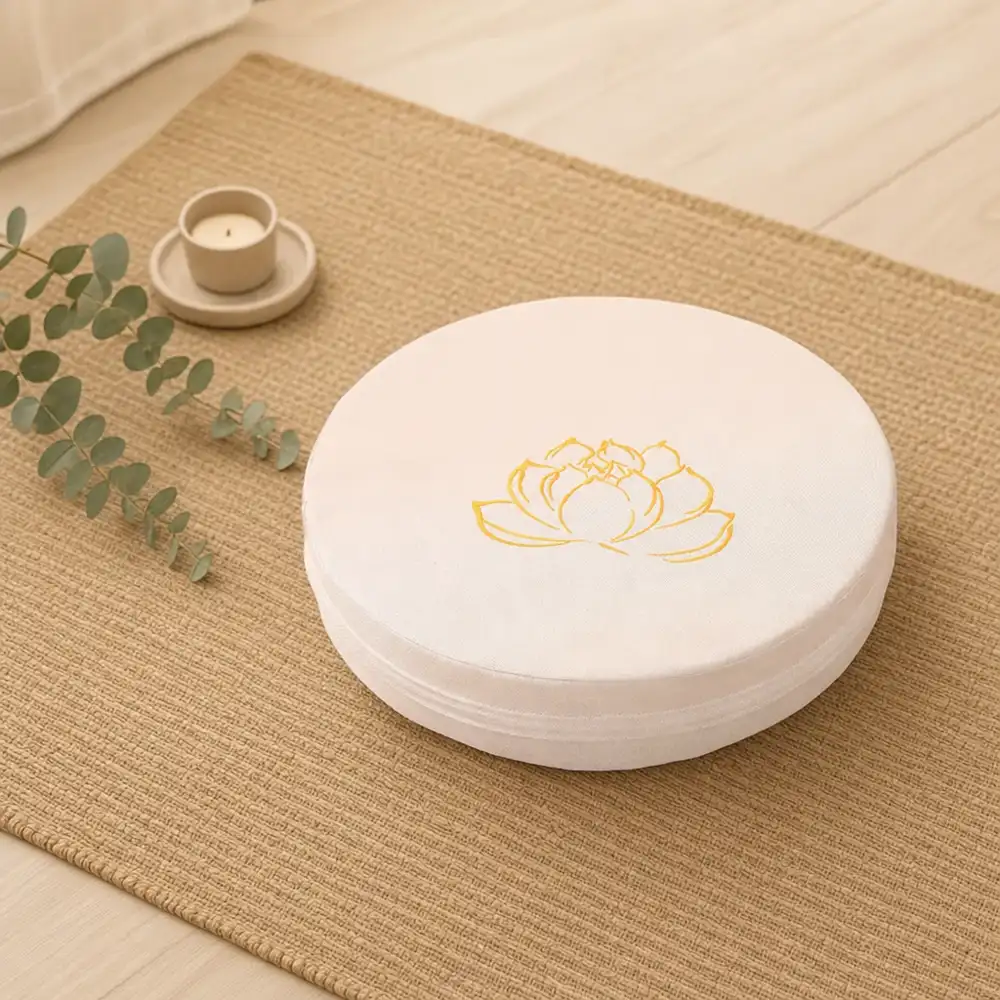
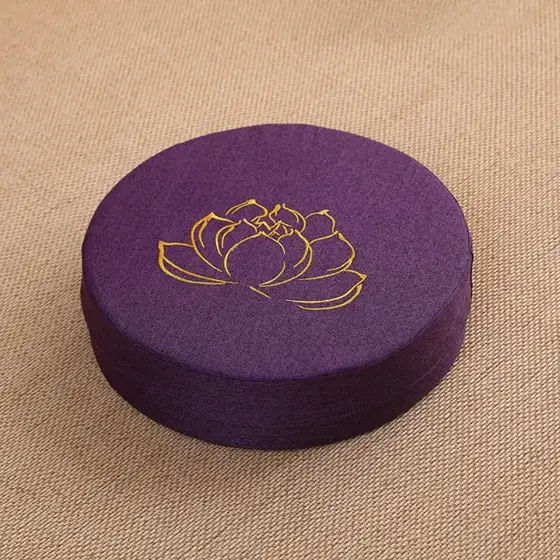
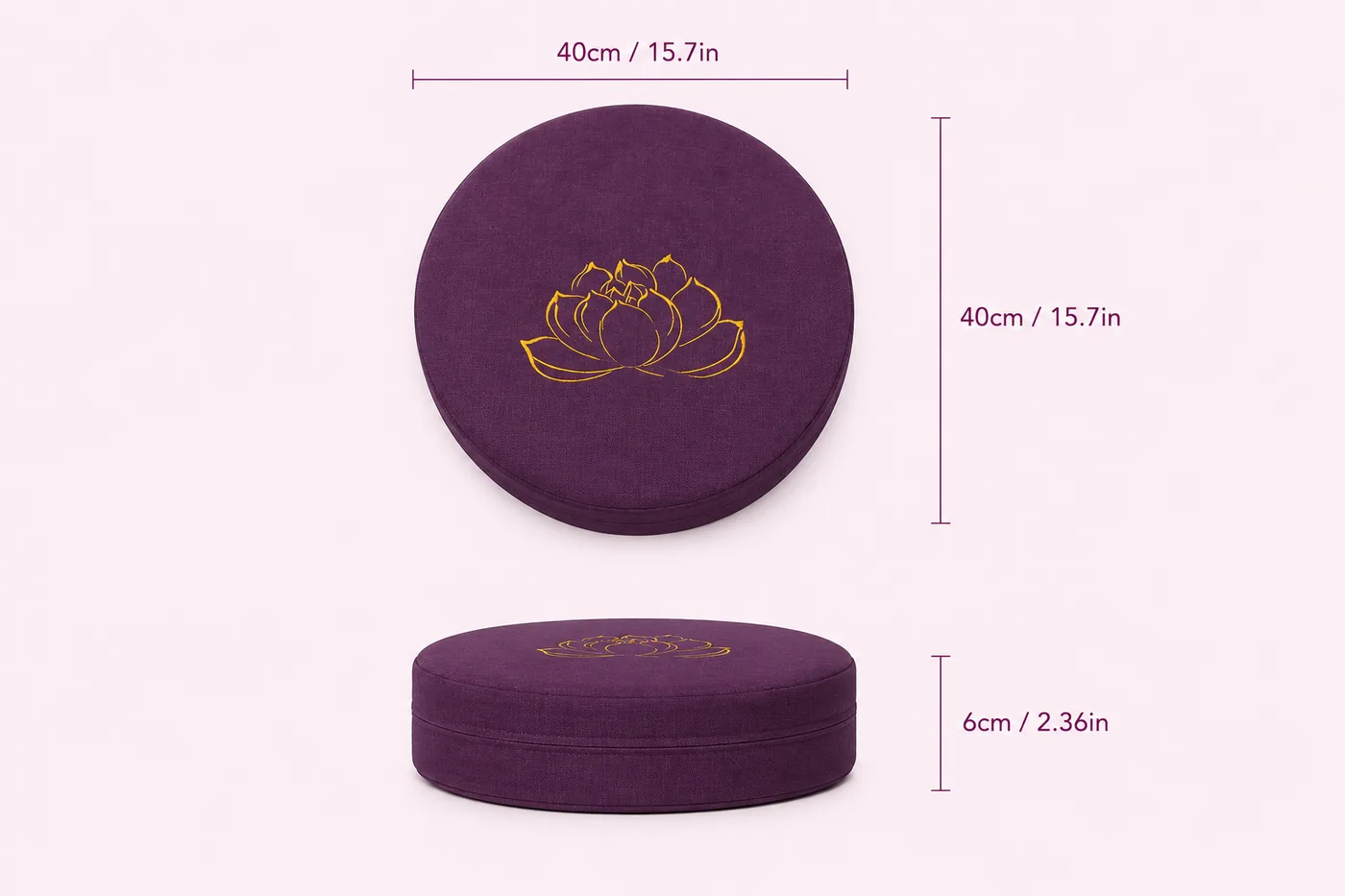
A flat firm cushion is a low round disc with a dense core that barely compresses when you sit on it. Ours measures 15.7 inches across and 2.36 inches thick, with a high-density foam core and a removable linen cover. The low profile suits sitters whose knees already reach the floor comfortably in a cross-legged seat, and it doubles as everyday floor seating. Buyers describe it plainly in our verified reviews: it is a hard pillow, and that firmness is the point. It slides under furniture, stacks flat, and travels easily.
Buckwheat zafu
The traditional zafu is a tall round cushion filled with buckwheat hulls. The hulls shift as you settle, so the seat molds to your sit bones, and most models let you add or remove fill to tune the height. That 4 to 6 inch lift is exactly what tighter hips need to get the knees down. The tradeoffs are real, though: hulls compact over time and need topping up, the filled cushion is bulky to store or carry, and the hull layer can feel lumpy through thin fabric. Our zafu vs zabuton guide covers how these pair with floor mats.
Crescent cushion
A crescent cushion is a half-moon shape that supports the thighs while leaving room behind the pelvis. Sitters who like a pronounced forward tilt often prefer it, because the shape encourages the pelvis to rock forward while the horns of the crescent carry some thigh weight. The open back means less material under you, so the height range plays like a slightly lower zafu. It is a specialist shape: excellent in a cross-legged seat, less useful as general floor seating or a kneeling base.
Meditation bench
A meditation bench is a small wooden seat that holds your weight in a kneeling position with your shins tucked underneath. Because wood does not compress, the posture it gives you is extremely consistent, and many people with tight hips find kneeling easier to sustain than crossing their legs. The limits are obvious once you use one: it only supports kneeling, it does not cushion anything, and it is the least portable option here. We compare the two approaches in detail in meditation cushion vs bench.
StillSeat Meditation Cushion
★ 4.9/5 · 45 verified reviews · $39.95
How to choose the best meditation cushion: the four criteria that matter
Choose by seat height first, firmness second, cover fabric third, and intended use last. Height decides whether your knees reach the floor, firmness decides whether your posture holds through a full session, and the cover decides how the cushion survives daily life in a real home.
1. Seat height and hip flexibility
Sit cross-legged on a folded blanket and notice your knees. If they rest at or below your hip crease, a low 2 to 3 inch seat is enough, and extra height would only push you backward. If they hover well above your hips, you need 4 inches or more of lift before any cushion will feel steady. This single check answers most of the buying question, and our guide on how to sit on a meditation cushion walks through it step by step with photos.
2. Firmness you can trust
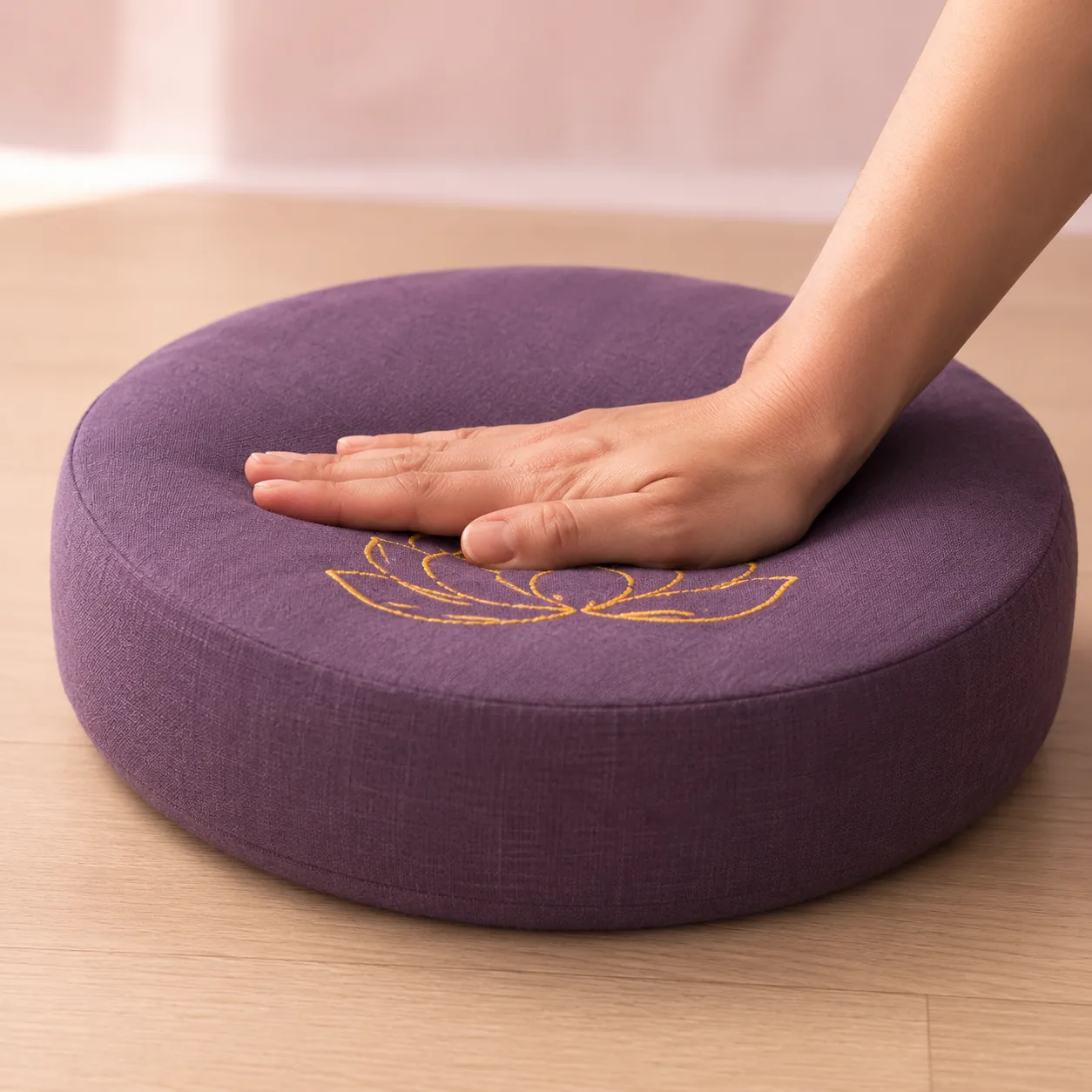
A seat that compresses changes your posture mid-session without you noticing. High-density foam keeps the same height at minute one and minute forty. Buckwheat holds height well but shifts audibly as you move. Soft polyfill and kapok pillows lose a large share of their loft the moment you load them, which is why a bed pillow never works for sitting practice. If you plan to sit most days, firm fill is the difference between a seat and a slow slump.
3. Cover fabric and upkeep
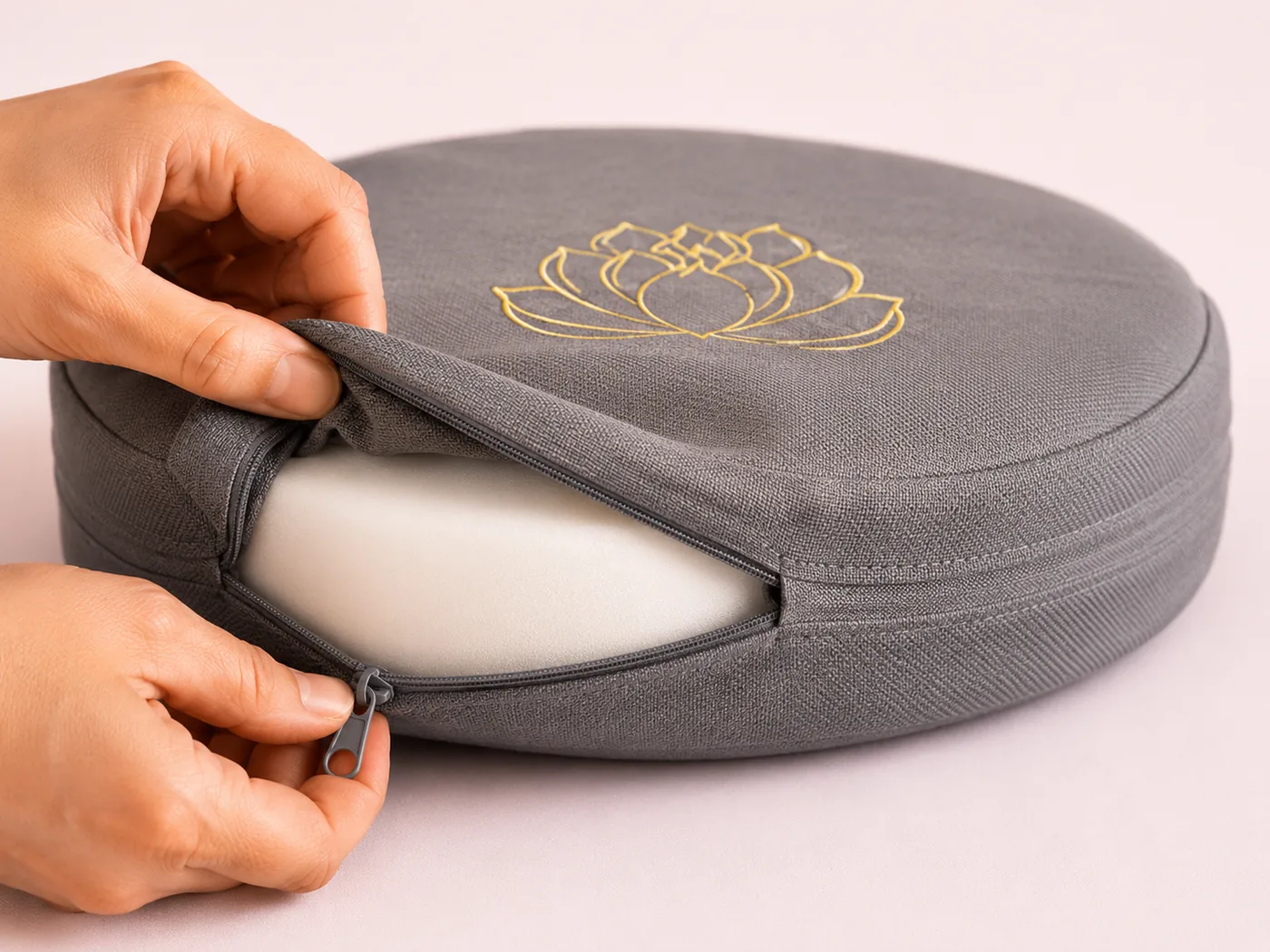
A cushion that lives on the floor gets dusty, gets sat on in jeans, and occasionally meets a coffee cup. A removable, zippered, machine-washable cover is close to mandatory. Linen and cotton canvas both age well; linen stays cool against skin and gets softer with each wash. Fixed covers, common on cheap imports, mean spot-cleaning the whole cushion forever. The zipper is the part to check, whatever the type.
4. Where and how often you sit
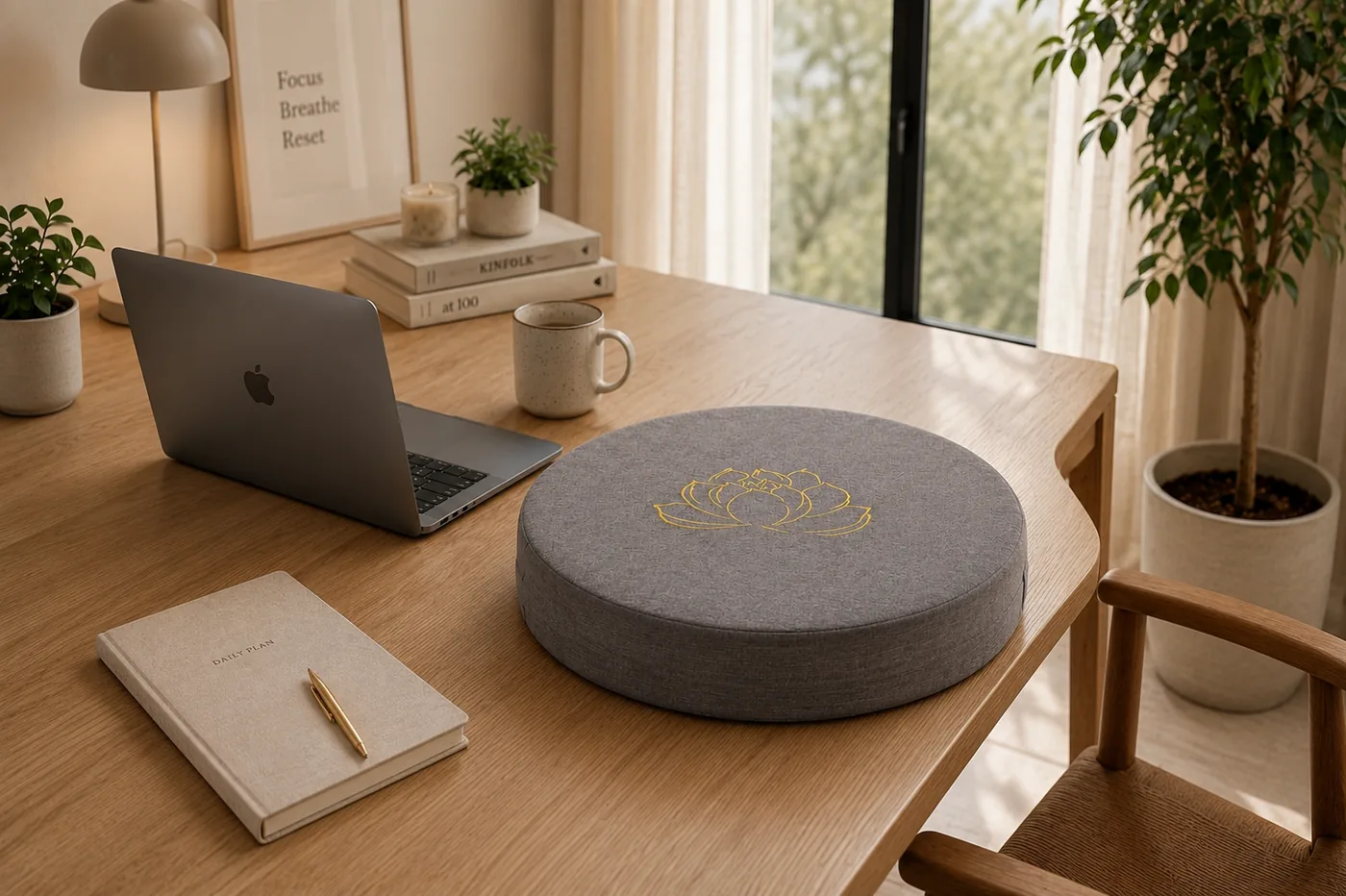
A dedicated meditation room forgives a bulky zafu or a bench. A living-room corner does not. If your cushion needs to serve as guest seating at the coffee table between sessions, a flat firm disc earns its place, which is the whole argument of our floor pillows for sitting page. If several people in the house sit, a meditation cushion set is cheaper per seat than buying one at a time. And if your cushion rides to a studio each week, low and light beats tall and heavy.
Our pick for low sitting, including its limits
Our pick in the flat firm category is our own StillSeat cushion, and we can defend that with its numbers rather than adjectives. It is the right choice for flexible hips, seiza, and everyday floor seating. It is the wrong choice if you need a tall seat, and we say so plainly below.
In numbers: our cushion is 40 cm / 15.7 in across and 6 cm / 2.36 in thick, with a high-density foam core that compresses only slightly under body weight and returns to shape as soon as you stand up. One verified buyer summed up the feel better than we could: "Good material, hard pillow, just what I wanted."
| Diameter | 40 cm / 15.7 in |
| Thickness | 6 cm / 2.36 in |
| Core | High-density firm foam |
| Cover | Removable, zippered, washable linen with gold lotus embroidery |
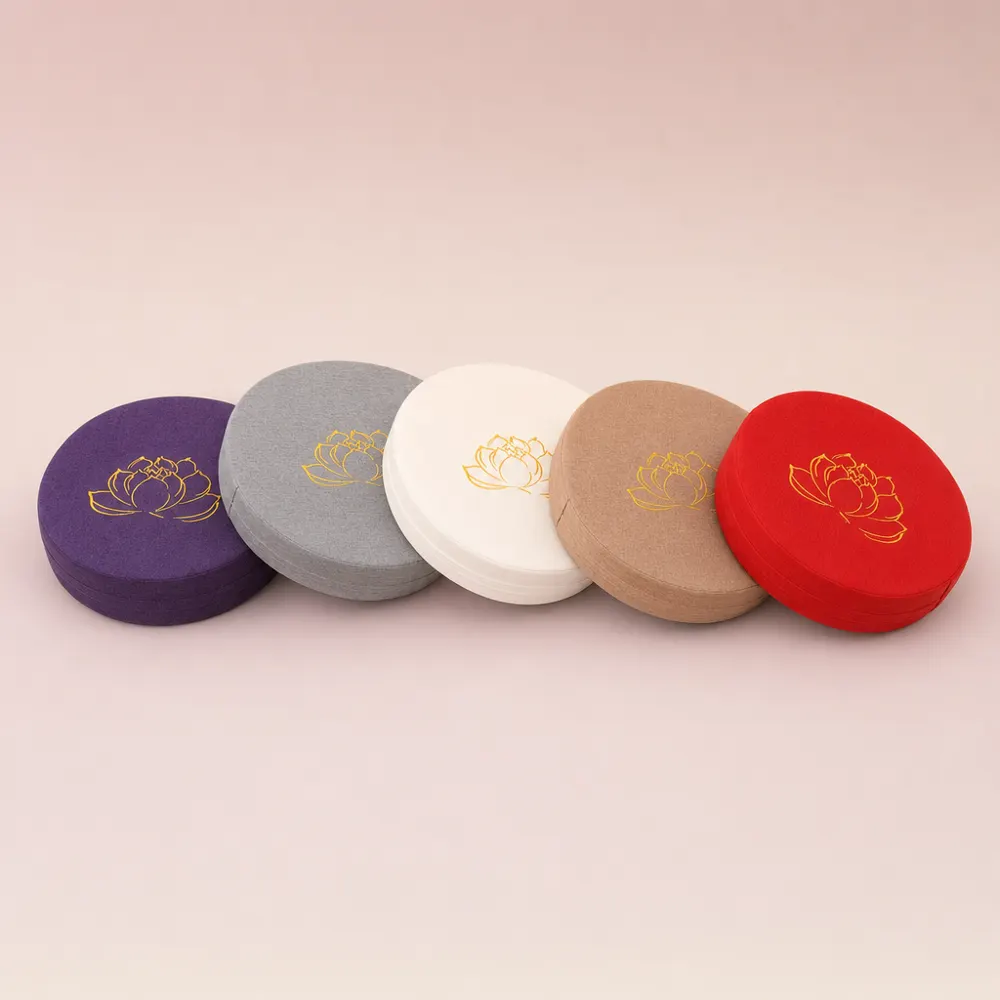
Now the part. This cushion will not suit you if you want a tall seat. At 2.36 inches, it lifts the pelvis slightly, and that is all it is designed to do. If your knees float high above the floor when you cross your legs, a taller buckwheat cushion or a bench will serve you better, and you should buy one of those instead. For everyone else, $39.95 for a washable linen cover, seven colors, and a core that stays firm is a strong deal, and you can judge the value question yourself in are meditation cushions worth it.
Meditation seating by the numbers
Floor meditation stopped being a niche habit years ago. National survey data shows a large and fast-growing share of American adults now practice meditation or yoga, which explains why the cushion market has split into so many specialized types and why choosing by body type matters.
of U.S. adults used meditation in 2022, according to the National Health Interview Survey
— NIH/NCCIH analysis of the National Health Interview Survey, published in JAMA, 2024
growth in meditation use among U.S. adults between 2012 (4.1%) and 2017 (14.2%)
— CDC NCHS Data Brief No. 325, 2018
of U.S. adults practiced yoga in 2022, many of whom also use a cushion for seated practice
— CDC NCHS Data Brief No. 501, 2024
Verified reviews.
Free shipping · 30-day 30-day returns · Dispatched within 1-2 business days
Best meditation cushion FAQ
What is the best meditation cushion for beginners?
Most beginners do well starting low and firm. A 2.36-inch high-density foam cushion gives a stable, predictable seat while you learn how your hips behave. If your knees sit far above your hips when you cross your legs, start taller instead, with a buckwheat cushion or a kneeling bench.
Is a firm meditation cushion better than a soft one?
For sitting still, yes. A firm cushion holds your pelvis at the same height for the whole session, so your posture does not slowly change as the fill compresses. A soft pillow feels welcoming for the first few minutes and then lets you sink, which is why experienced sitters usually choose firm support.
How high should a meditation cushion be?
It depends on your hip flexibility. Flexible sitters are comfortable at 2 to 3 inches of seat height, which is where our 2.36-inch cushion sits. Average flexibility usually calls for 4 to 6 inches. If your knees float well above the floor in a cross-legged seat, look at taller buckwheat fills or a bench.
How long does StillSeat shipping take?
Orders are dispatched within 1-2 business days and arrive in 6-10 business days, with free shipping. Every cushion is covered by 30-day 30-day returns, so you can test the height through real sittings at home and send it back for free if it turns out to be wrong for your hips.
Written by Rachel Bennett, meditation practitioner and floor-seating writer. Read how we test or browse the yoga meditation cushion guide next.