
· Rachel Bennett
Meditation Cushion vs Bench: Which Should You Choose?
The cushion and the bench are the two great families of meditation seating, and people tend to be loyal to whichever one they tried first. That is a shame, because the two supports produce genuinely different postures, and a sitter who struggles for months on one often settles in immediately on the other. The right question is not which product is better. It is which posture your body prefers.
In this comparison I will explain how each seat actually positions you, put the practical differences in one table, including what each type typically costs, and then give you a plain recommendation by body type and habit.
Meditation cushion vs bench: how each seat actually works
The cushion: a raised base for crossed legs
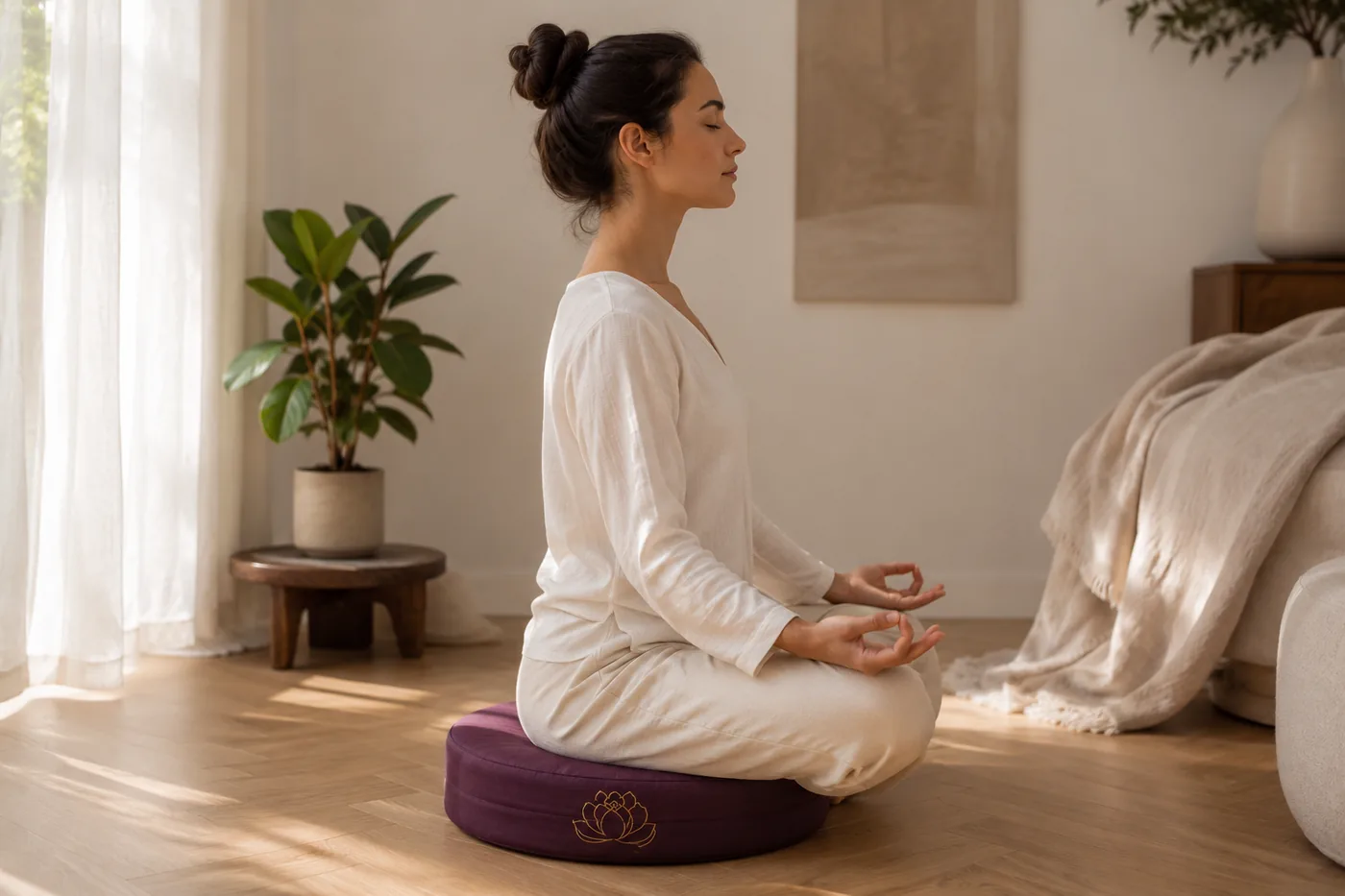
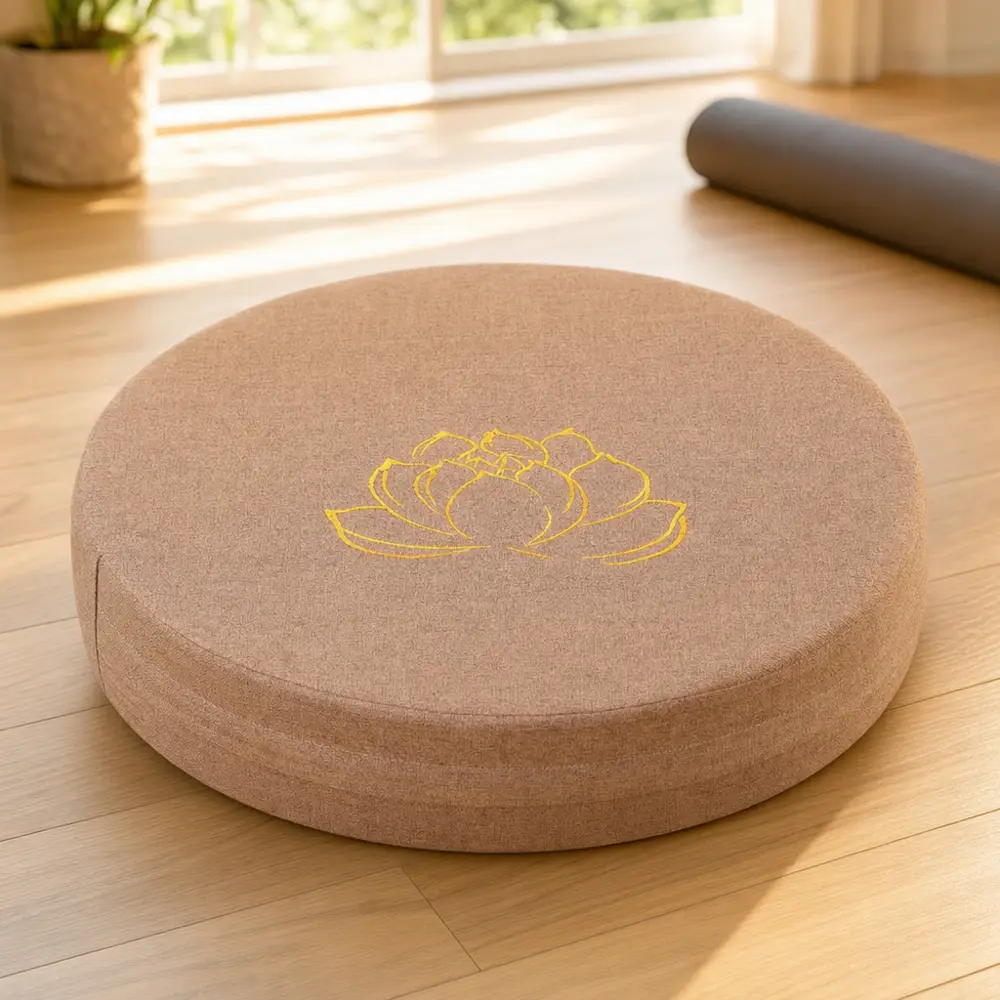
A meditation cushion raises your pelvis above your knees so that your legs can fold in front of you while your spine stacks tall. The category runs from tall buckwheat zafus, usually five to eight inches high, down to low, firm cushions of two to three inches. Height is the main variable: the stiffer your hips, the more lift you need to get your knees down to the floor.
The cushion's real advantage is versatility. The same round seat supports easy pose, Burmese position, quarter lotus, and, if it is low and firm enough, seiza with the cushion laid flat between your heels. It also doubles as ordinary floor seating around a coffee table, which is why the category overlaps with floor pillows for sitting. If the positions themselves are unfamiliar, start with our step-by-step guide on how to sit on a meditation cushion.
The bench: a supported kneel
A meditation bench, often called a seiza bench, is a small wooden seat about six to nine inches tall with an angled top and two legs. You kneel, slide your shins under the bench, and sit back onto it. Your body weight rests on the seat rather than on your heels, and your shins carry almost nothing.
The bench solves one problem extremely well: it removes hip flexibility from the equation entirely. There is no crossing, no outward rotation, and no knee fold beyond a basic kneel. The angled seat tips your pelvis forward automatically, so the tall spine tends to happen on its own. The trade-off is that a bench supports exactly one posture, and it wants padding under your shins on any hard floor.
Both families have ridden the same wave of Americans bringing contemplative practice home, which is why the once-obscure seiza bench now appears in mainstream stores.
of U.S. adults used at least one complementary health approach such as meditation or yoga in 2022, up from 19.2% in 2002
The meditation cushion vs bench comparison table
Prices below are typical ranges by product type across US retailers. They are not quotes for any specific brand.
| Factor | Meditation cushion | Seiza bench |
|---|---|---|
| Seat height | 2 to 8 inches depending on style | 6 to 9 inches, angled |
| Posture produced | Cross-legged variants plus seiza | Supported kneeling only |
| Hip flexibility needed | Low to high, depending on height | Almost none |
| Sensitive knees | Kinder when sitting cross-legged | Kneeling folds the knees fully |
| Portability | Light but bulky to pack | Flat-folding models pack easily |
| Extras you may want | A mat on hard floors | Shin padding on hard floors |
| Typical price by type | About $25 to $80 | About $50 to $120 |
Who does better with a cushion
Pick a cushion if you want one seat that covers several positions, if you like alternating between cross-legged and kneeling, or if your knees dislike being fully folded for a whole session. Kneeling bends the knee joint completely, while a cross-legged seat on a cushion leaves it half open, which many sitters with cranky knees find easier to live with. A cushion is also the natural pick if the seat will moonlight as living room seating or as a prop for seated stretching, a use we cover on the yoga meditation cushion page.
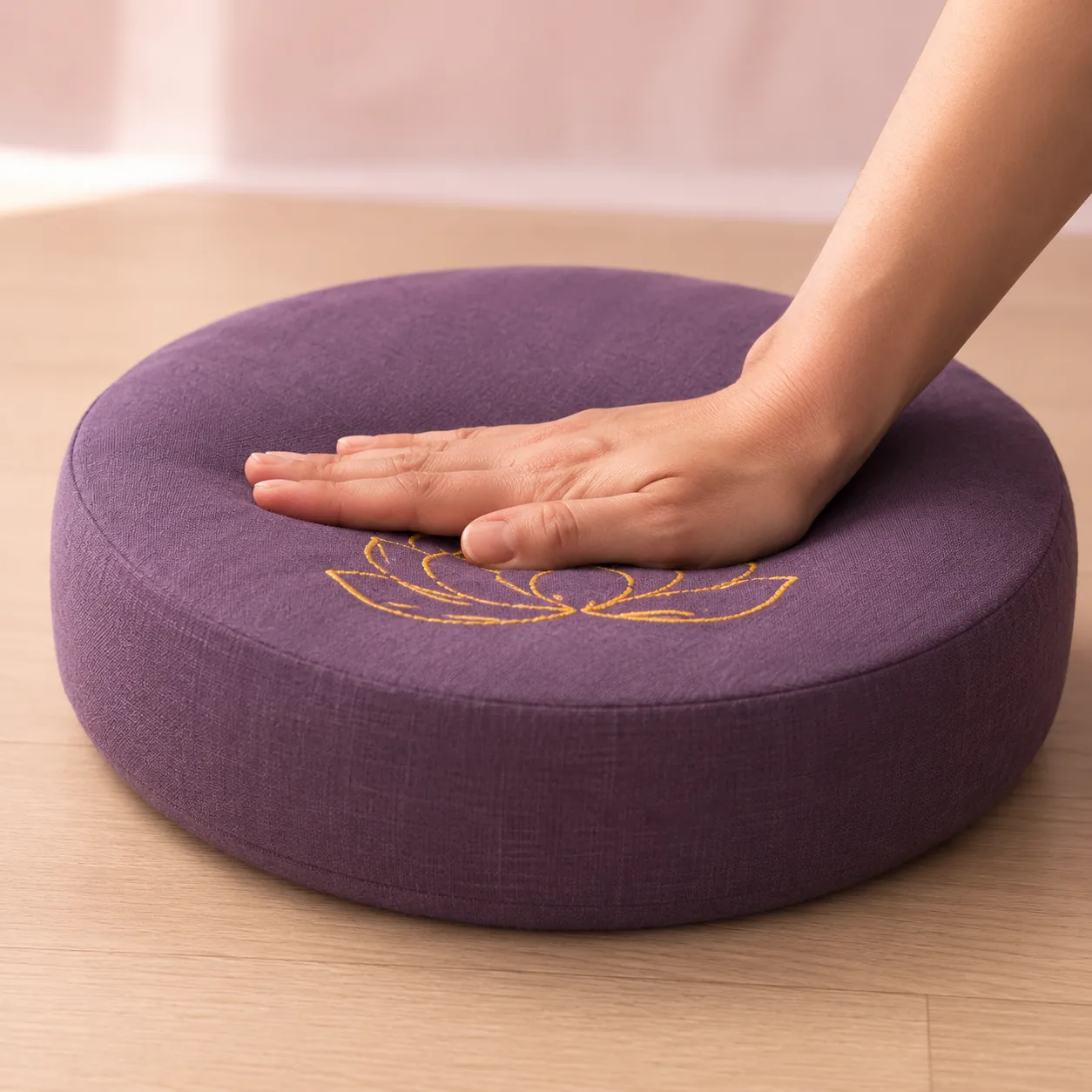
Within the cushion family, match the height to your hips. Tight hips want a tall zafu, while average and open hips do well on a lower, firmer seat. Since this is the category we work in, this is where our own product sits: the StillSeat cushion is a low, firm option, 15.7 inches across and 2.36 inches tall, with a high-density foam core and a washable linen cover. The firm core is what makes a seat this low workable, because a soft pillow of the same height simply flattens and gives your pelvis nothing to sit on. Buyers in our verified reviews call it a "hard pillow" approvingly. If your knees ride high in a cross-legged test, though, be honest with yourself and start taller. Our best meditation cushion guide ranks the styles by exactly that test, and the zafu vs zabuton explainer covers the tall end of the range.
Who does better with a bench
Pick a bench if cross-legged sitting has never felt right, if your hips are notably stiff, or if you already find yourself kneeling naturally when you sit on the floor. Bench sitters tend to be people who tried cushions, spent whole sessions negotiating with their knees, and discovered that a supported kneel let them forget about their legs entirely.
A bench is also the pragmatic choice for travel. Many models fold flat and slip into a suitcase more gracefully than a round cushion ever will, and our guide to travel meditation cushions compares that route against inflatable and folding seats. The one caution is for anyone whose knees or ankles genuinely dislike deep kneeling: the bench reduces the pressure of seiza, but it cannot remove the fold itself. If a basic kneel on a carpeted floor feels bad after two minutes, the bench will not fix that, and a cushion route will serve you better.
Meditation cushion or bench, or both?
Yes, and long-term sitters often do. A common pattern is a cushion for daily home practice and a folding bench for retreats and travel. Another is alternating seats across the week so that no single joint carries every session. There is no rule that says a practice must live on one piece of furniture.
If you are starting from zero and can buy only one seat, buy for the posture that felt most natural in a two-minute floor test today. You can add the other family later, and multi-packs make the cushion side of that equation cheap to share across a household, as covered on our meditation cushion set page. For the mechanics behind either seat, our breakdown of why a meditation cushion is worth it shows what raising the pelvis does to a spine.
Free shipping · 30-day 30-day returns