
· Rachel Bennett
Zafu vs Zabuton: What Is the Difference?
Walk into any meditation hall and you will see the same two-piece setup repeated across the room: a round cushion perched on a wide flat mat. The round one is the zafu, the flat one is the zabuton, and the pairing is so common that many beginners assume they are two parts of a single product. They are not. Each piece has its own job, and you can absolutely start with only one of them.
After twelve years of daily sitting, I can tell you that understanding this one distinction saves people real money. Plenty of new sitters buy the wrong piece first. This guide defines both, compares them side by side, and shows you exactly which one your body is asking for.
What is a zafu?
A zafu is the classic round meditation cushion that came out of the Japanese Zen tradition. The typical zafu measures somewhere around twelve to sixteen inches across and five to eight inches tall, and it is most often filled with buckwheat hulls or kapok fiber. Buckwheat versions mold to your sit bones and feel grain-like and heavy, while kapok versions feel springier and lighter.
The zafu has one job: it lifts your pelvis well above your knees. That elevation tips the pelvis forward, drops the knees toward the floor, and lets the spine stack tall with far less muscular effort. The stiffer your hips, the more of that lift you need, which is why tall buckwheat zafus remain the standard recommendation for beginners who struggle to sit cross-legged. You will also see crescent-shaped zafus, which cut away the front edge to give the thighs more room to slope downward.
If the mechanics of pelvis placement are new to you, our guide on how to sit on a meditation cushion walks through the whole posture from the ground up.
What is a zabuton?
A zabuton is the wide, flat, rectangular mat that sits underneath the zafu. A common size is roughly two by three feet, with a couple of inches of cotton batting inside. It is not there to lift you at all. Its job is padding: it protects your knees, ankles, and the tops of your feet from the hard floor while you sit.
On carpet, a zabuton is a comfort upgrade. On hardwood or tile, it is close to essential for cross-legged and kneeling positions, because your knees and ankle bones press into the floor for the entire session. People also use zabutons alone as kneeling pads, as soft landings for stretching, and as guest seating around a low table, roles that overlap with the wider world of floor pillows for sitting.
Meditation seating has quietly become a mainstream purchase, which explains why both pieces now show up in ordinary home goods aisles rather than only in specialty shops.
of U.S. adults meditated in 2017, up from 4.1% in 2012, a more than threefold rise in five years
— CDC, NCHS Data Brief No. 325, 2018
Zafu vs zabuton: side-by-side comparison
| Feature | Zafu | Zabuton |
|---|---|---|
| Shape | Round or crescent | Flat rectangle |
| Typical height | 5 to 8 inches | 1 to 3 inches |
| Typical fill | Buckwheat hulls or kapok | Cotton batting or foam |
| Main job | Lifts the pelvis above the knees | Pads the knees, ankles, and feet |
| Where it goes | Under your sit bones | Under everything, including the zafu |
| Used alone? | Yes, especially on carpet | Yes, mainly for kneeling or casual sitting |
The simplest way to remember the difference is vertical versus horizontal. The zafu works vertically by raising your pelvis. The zabuton works horizontally by softening everything that touches the ground.
When to use one, the other, or both
Use a zafu alone when you sit on carpet or a rug and your knees tolerate the floor well. The lift is the part that transforms posture, so if the budget covers only one piece and your hips are tight, the elevated seat comes first.
Use a zabuton alone when you already kneel comfortably in seiza, when you meditate in short sessions, or when your existing seat gives you enough height and your joints simply want padding. It is also the piece to choose if your practice happens on hardwood and your ankle bones complain before your back does.
Use both when you sit long sessions on hard floors. The combination is the traditional setup for a reason: the zafu handles alignment while the zabuton handles contact points, and neither piece does the other's job. Households where two people share a practice often stagger the purchase, starting with seats and adding mats later. Our meditation cushion set page covers the multi-cushion route for exactly that situation.
Where a low, firm cushion fits in the zafu vs zabuton choice
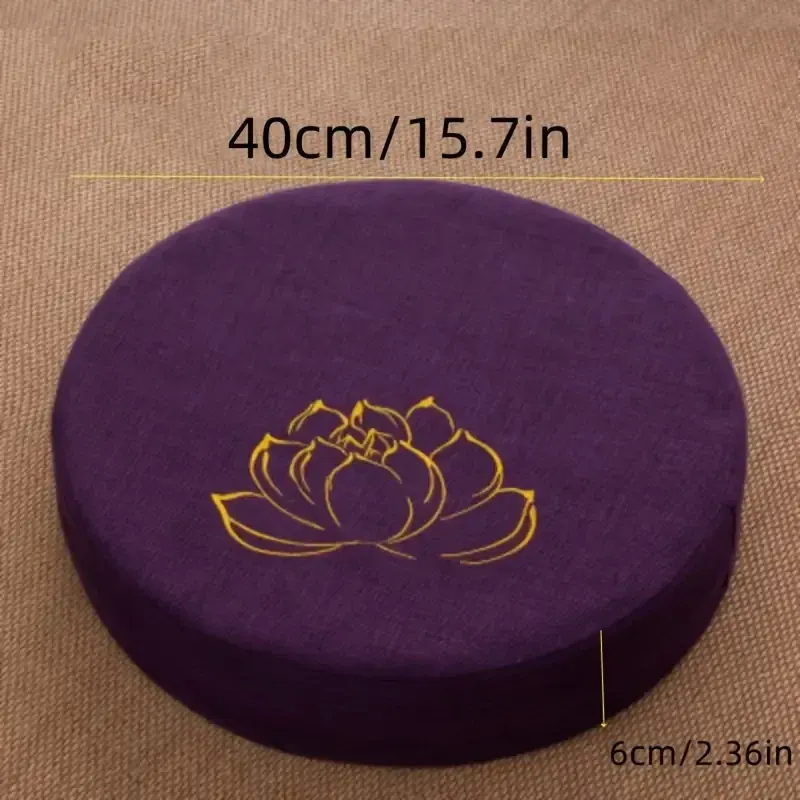
There is a third category that this classic pairing leaves out, and it happens to be the one we sell. A low, firm cushion sits between the zafu and the zabuton: noticeably lower than a zafu, but far more structured than a zabuton. Ours belongs to that third category, and the paragraphs below are about what that profile does under a sitter.
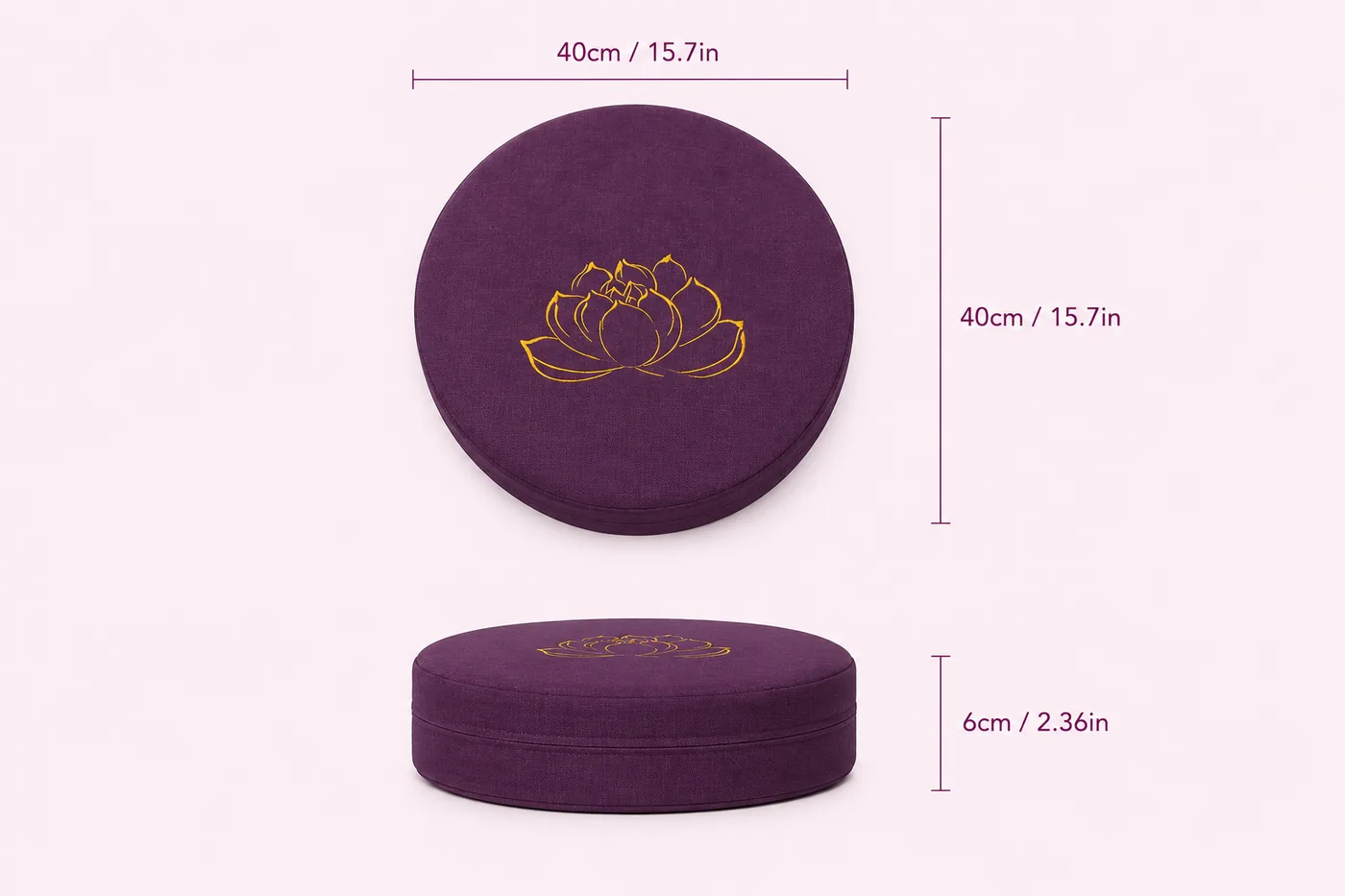
The StillSeat meditation cushion measures 15.7 inches across and 2.36 inches tall, with a high-density foam core that holds its shape under adult weight rather than compressing flat the way soft batting does. It gives a modest pelvic lift, a very stable base, and a linen cover that zips off for the wash.
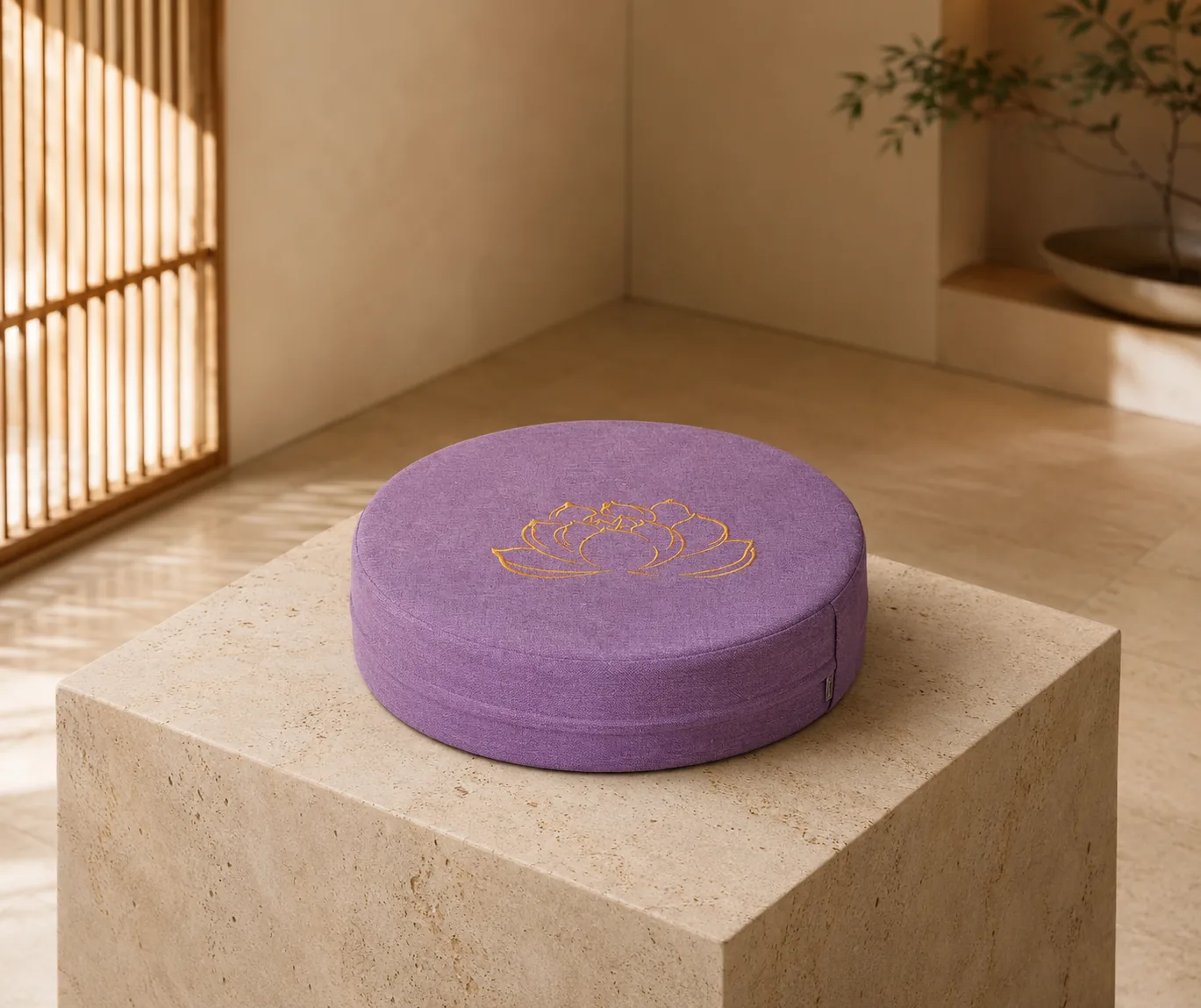
That profile suits sitters whose knees already reach the floor without drama: the lift they need is small, and what they want instead is a firm, grounded seat that does not wobble. It also works laid flat between the heels for seiza, a role a tall zafu handles awkwardly. Buyers in our verified reviews repeatedly describe the firmness with phrases like "hard pillow" and "well made," which is exactly the trade the low-and-firm category makes. To compare the categories side by side, our best meditation cushion guide puts zafus, low cushions and benches on the same table, and the cushion vs bench comparison goes deeper on the kneeling option.
A quick zafu vs zabuton guide by flexibility
Flexibility, more than tradition or looks, should decide what you buy first. Sit cross-legged on the floor with nothing under you and notice where your knees hang. Then find your row in the table below.
| Your cross-legged test | Best first purchase |
|---|---|
| Knees rest on or near the floor easily | A low, firm cushion gives enough lift with maximum stability |
| Knees hover slightly above hip level | A standard zafu, buckwheat if you want a moldable seat |
| Knees point clearly upward, hips feel locked | A tall zafu on a zabuton, or a kneeling bench instead |
| Cross-legged feels bad, kneeling feels fine | A zabuton for padding plus a low cushion or bench for seiza |
Whatever you land on, buy for the body you have now. Hips open with practice, and a seat that fits today keeps you sitting long enough to need a different one later. For the mechanics underneath all of this, why a meditation cushion is worth it shows what raising the pelvis does to a spine. Yoga practitioners who mainly want a prop for seated poses will find the sizes on the yoga meditation cushion page.
Free shipping · 30-day 30-day returns