
Yoga Meditation Cushion: Stable Support on the Mat
A yoga mat solves grip. It does not solve sitting. The moment a class moves from standing work to a seated sequence, breathwork, or the closing minutes of stillness, most practitioners start negotiating with their own hips, and a folded blanket only half fixes it. This page covers where a firm cushion fits in a yoga practice, why stable foam outperforms a soft pillow on the mat, and how the same disc we sell as a meditation cushion handles both jobs.
Where a yoga meditation cushion fits in your practice
A cushion earns its place in three moments of practice: the seated opening and closing of class, floor postures where a knee or ankle needs a lift on hard flooring, and pranayama sessions where sitting tall for many minutes is the entire practice. In all three, firmness matters more than plushness.
Seated opening and closing
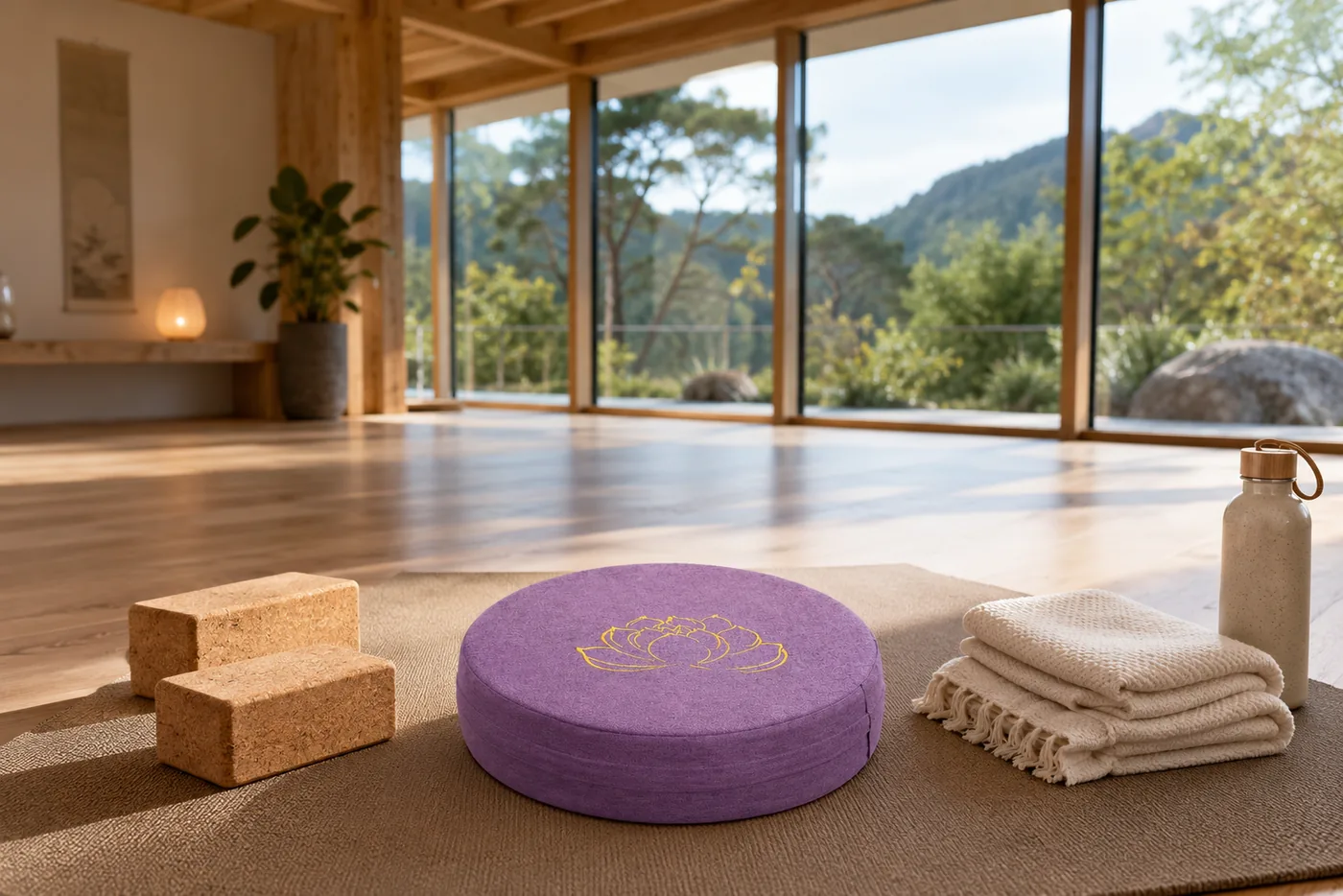
Classes begin and end sitting, and those minutes are where a low lift changes everything. Raising the pelvis about two inches lets the knees drop below the hip crease, which is what allows the spine to stack tall without effort. Our disc gives exactly that lift and no more. Practitioners who need serious height because their knees ride high should choose a taller seat instead, a tradeoff we lay out honestly in the best meditation cushion guide and in meditation cushion vs bench.
Support in floor postures
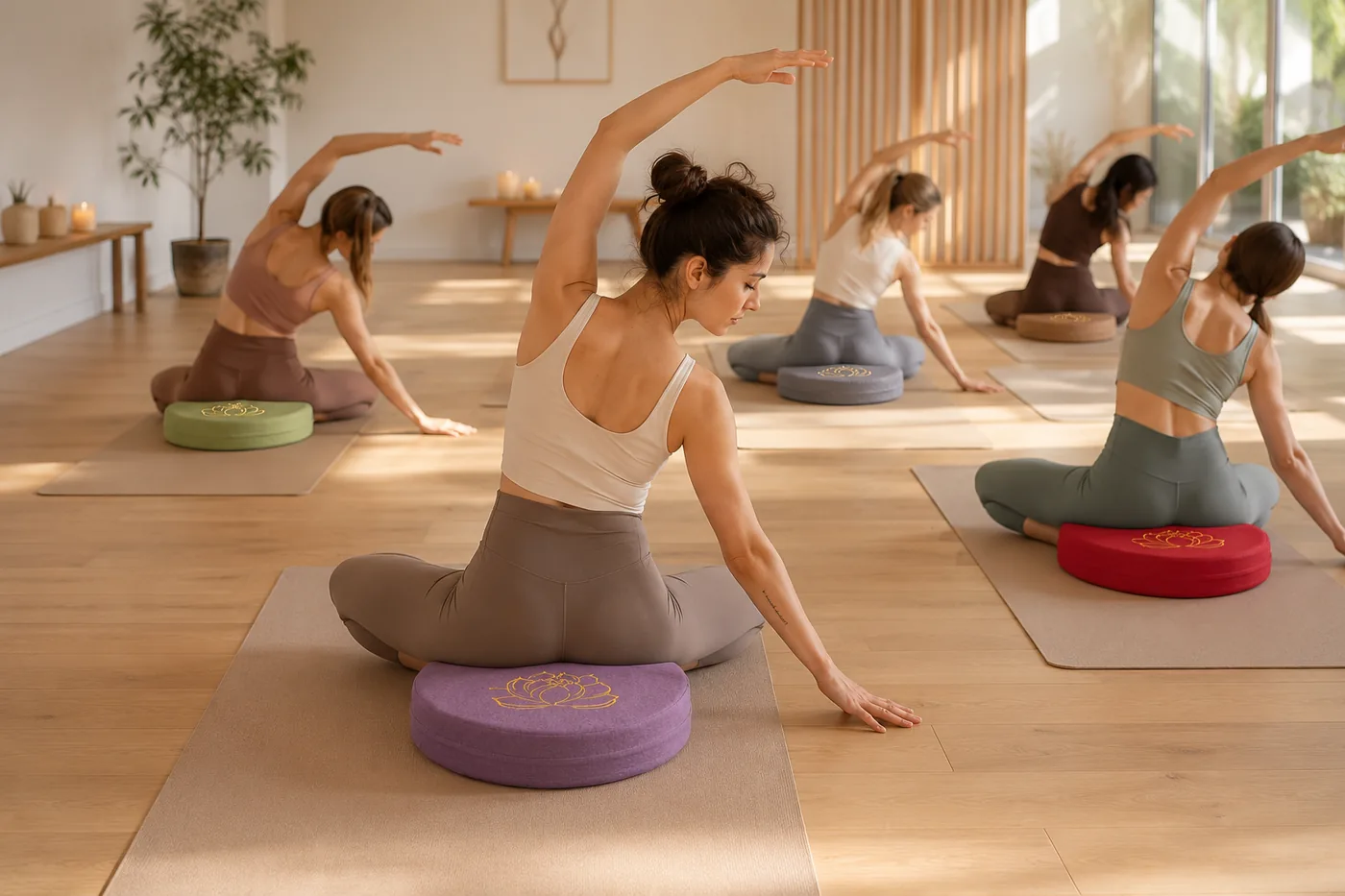
In cross-legged and kneeling shapes, hard flooring makes itself known through the mat. Sliding the disc under an ankle, a knee, or the sit bones fills the gap and makes long holds far more comfortable. Because the core is high-density foam rather than loose fill, the support does not flatten mid-pose: the height you set up with is the height you finish with. One buyer put it exactly: "They are hard, don't think they are soft. Perfect for posture."
Pranayama and breath practice
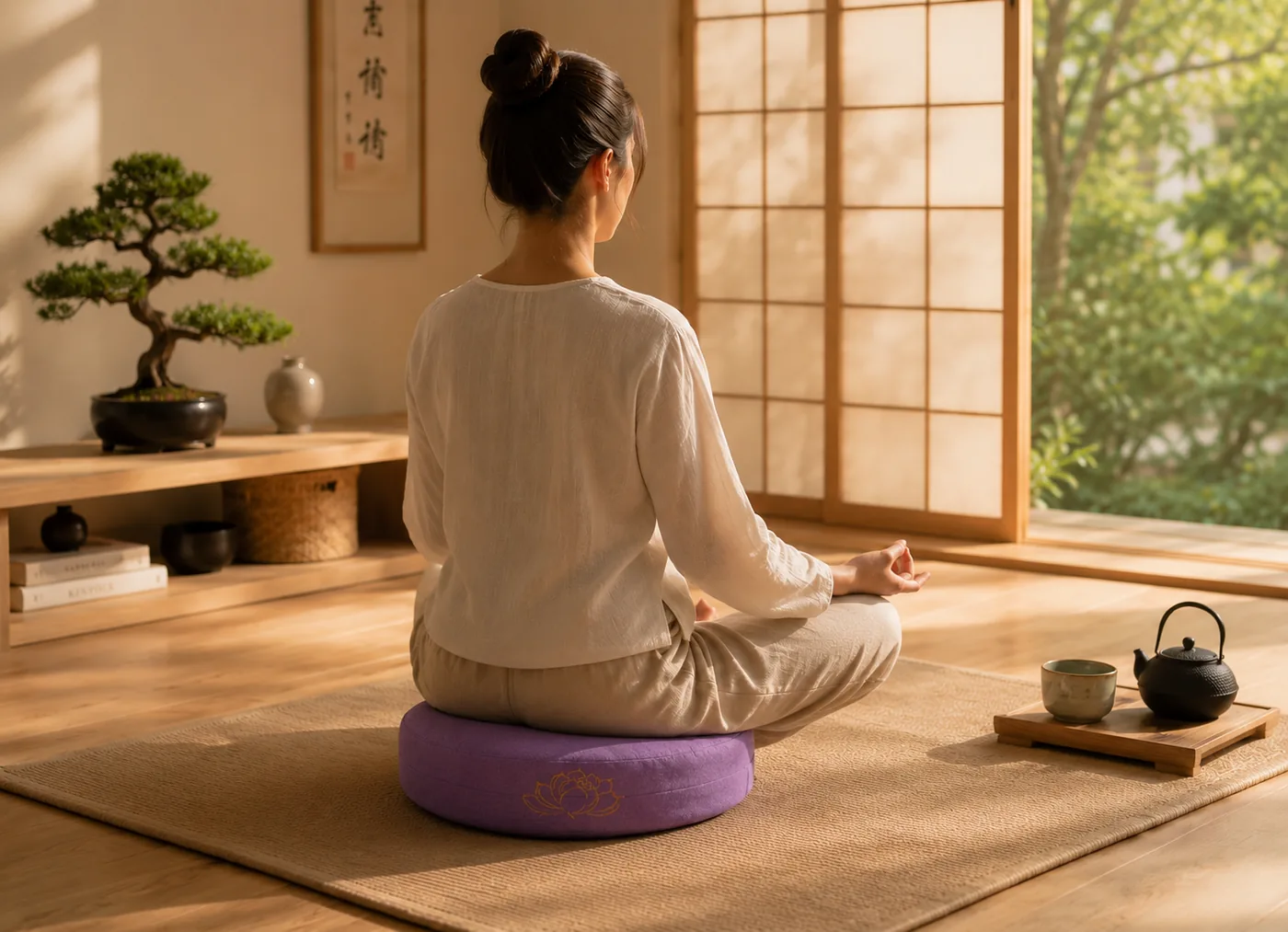
Breath practice asks you to sit tall and motionless for longer than most seated poses. A slight pelvic tilt forward makes that upright position easier to sustain, and a stable base removes the small corrections that a soft cushion forces every time it compresses further. The 15.7-inch disc also fits within the width of a standard mat with room to spare, so your whole setup stays on the grippy surface.
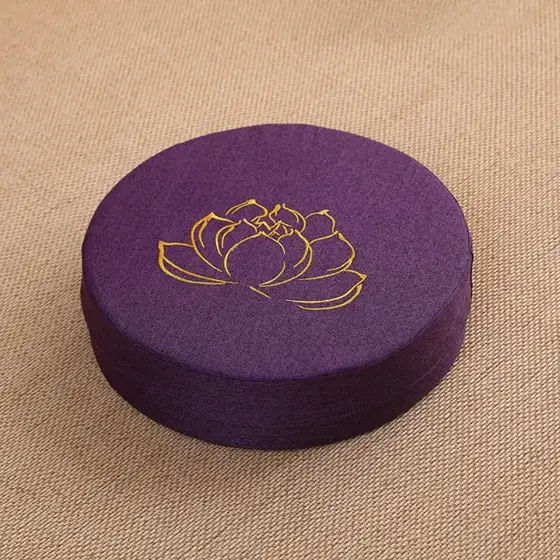
StillSeat Meditation Cushion
★ 4.9/5 · 45 verified reviews · $39.95
Firm foam vs a soft pillow on the mat
A soft pillow borrowed from the couch fails on a yoga mat in three ways: it compresses to nearly nothing under sitting weight, it rocks on its rounded underside, and its height changes throughout the session. A firm flat disc holds its height, sits flush on the mat, and behaves the same in minute one and minute forty.
| On the mat | Firm foam disc | Soft household pillow |
|---|---|---|
| Height under sitting weight | Holds 2.36 in | Compresses to a fraction of its loft |
| Stability | Flat base, full contact with the mat | Rounded base, rocks and scoots |
| Pelvic tilt | Slight, consistent forward tilt | Unpredictable as fill migrates |
| After class | Cover unzips and machine washes | Sweat soaks into the pillow itself |
| Carry to class | Slim 2.36-in disc slides into a tote | Bulky and shapeless to carry |
The wash point matters more in yoga than anywhere else. A cushion that comes to class meets sweat, and a fixed-cover pillow has no answer for that. A zippered linen cover goes straight into the machine and comes back softer, which is one reason linen has been used for hard-wearing textiles for centuries. Real buyer photos of the fabric up close are on our reviews page.
Yoga meditation cushion and mat: how they work together
Keep the mat for grip and the cushion for height. Place the disc on the back third of the mat for seated work, slide it aside for standing sequences, and bring it back for closing practice. The two tools solve different problems, and neither replaces the other.
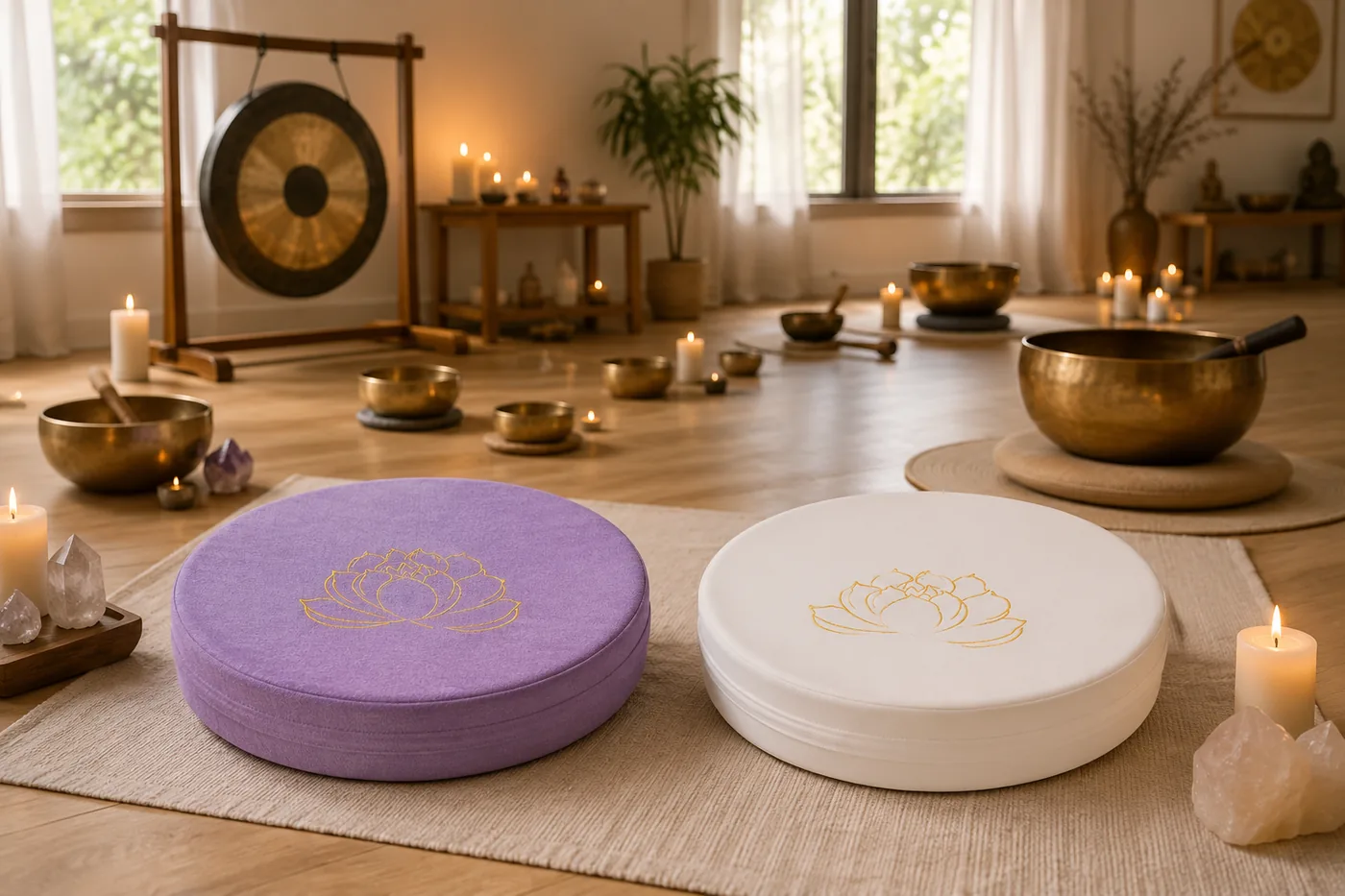
A useful way to think about the pairing: the mat manages the surface, the cushion manages your skeleton. On hardwood or tile, the mat stops the cushion sliding and the cushion keeps your pelvis raised and level. At home, the same disc then leaves the mat and becomes ordinary seating, which is exactly the double life described on our floor pillows for sitting page. Partners who practice together usually end up wanting a seat each, and the meditation cushion set prices a second and third cushion below the single. If you are still working out your ideal seated position, how to sit on a meditation cushion walks through the options, and zafu vs zabuton explains the taller traditional setup for comparison.
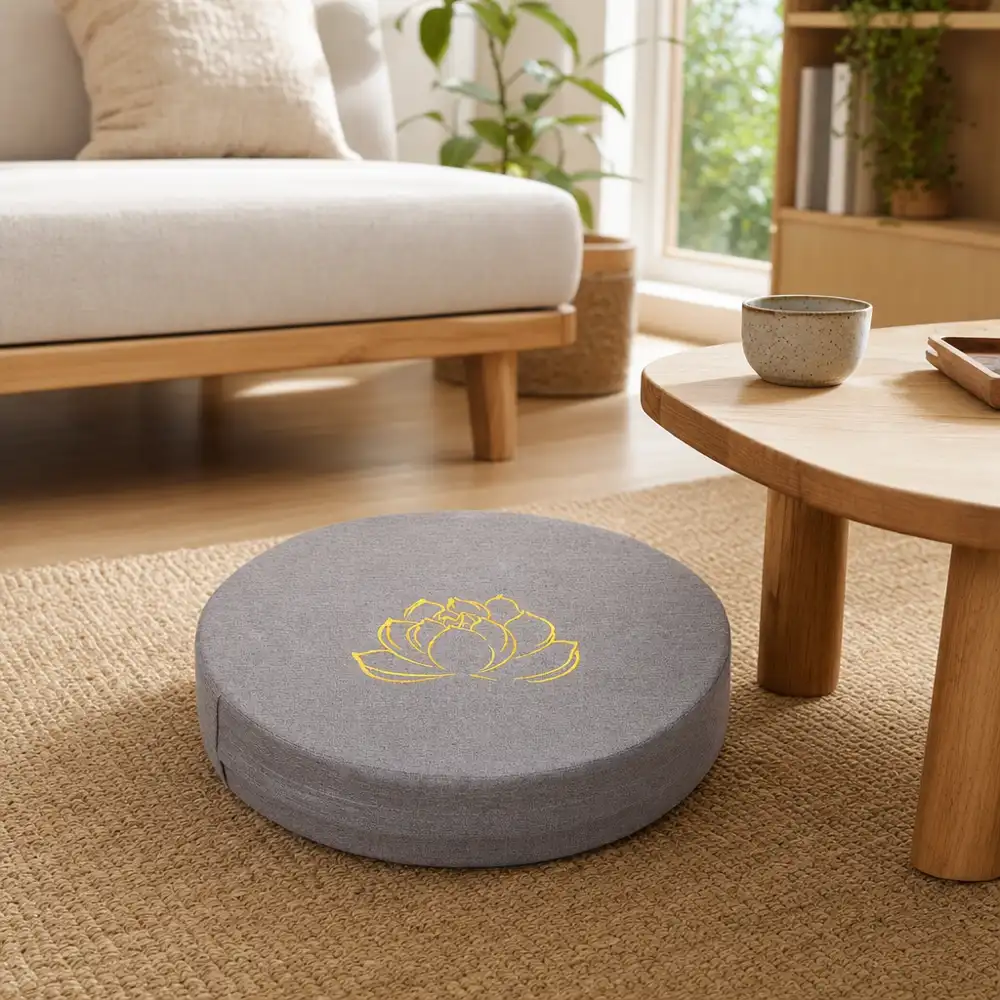
What lands on your mat
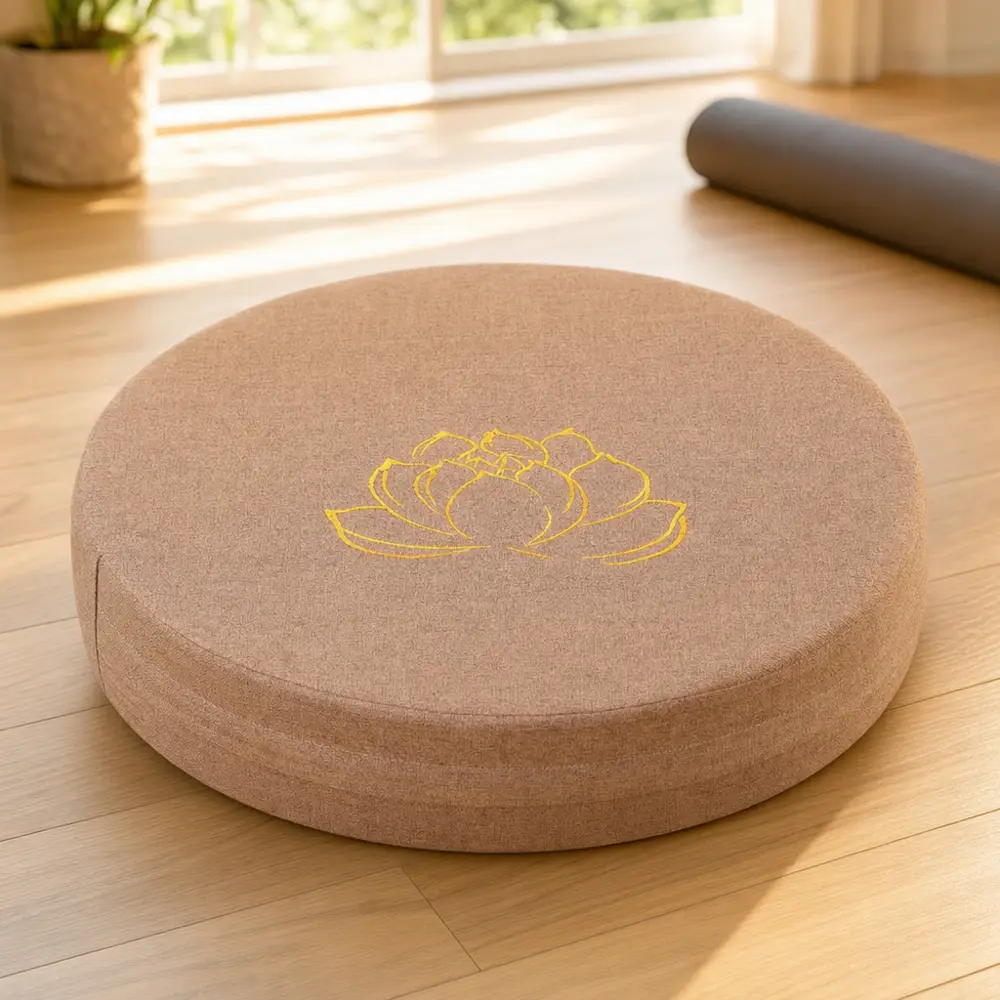
The cushion is a round disc 40 cm (15.7 in) across and 6 cm (2.36 in) thick, with a high-density foam core and a zippered linen cover, so yoga practitioners know exactly what lands on their mat. The disc is deliberately low and deliberately hard, and both qualities are the point rather than a compromise.
In numbers: the cushion is 40 cm / 15.7 in across and 6 cm / 2.36 in thick. The high-density foam compresses only slightly under body weight and returns to shape as soon as you stand up, and the flat base keeps full contact with the mat. A verified buyer's verdict: "Good material, hard pillow, just what I wanted."
If you want the value question answered before spending $39.95, are meditation cushions worth it goes through it with real numbers and real buyer photos.
Yoga and seated practice by the numbers
Yoga is one of the most widely practiced movement disciplines in the United States, and seated practice is growing alongside it. The survey data below is why the cushion-on-mat setup has become standard equipment rather than a studio curiosity.
of U.S. adults practiced yoga in 2022, roughly one in six
— CDC NCHS Data Brief No. 501, 2024
of U.S. women practiced yoga in 2022, more than double the 10.3% of men
— CDC NCHS Data Brief No. 501, 2024
of U.S. adults used meditation in 2022, according to the National Health Interview Survey
— NIH/NCCIH analysis of the National Health Interview Survey, published in JAMA, 2024
Verified reviews.
Free shipping · 30-day 30-day returns · Dispatched within 1-2 business days
Yoga meditation cushion FAQ
Do I need a meditation cushion if I already have a yoga mat?
For standing poses, no. For seated work, most people do. A mat gives you grip and a thin layer of padding, but it does nothing to lift the pelvis. A firm 2.36-inch cushion placed on the mat raises your hips slightly so you can sit tall through opening and closing sits, pranayama, and longer seated holds.
Will a cushion slip on a yoga mat?
A firm flat-bottomed cushion sits stable on a grippy mat, because the full 15.7-inch base stays in contact with the surface. Soft pillows are the ones that scoot, since their rounded undersides make contact at a single shifting point.
Can I use it under my knees or ankles in seated poses?
Yes. The disc slides under a knee or an ankle to fill the gap between your body and the mat in cross-legged and hero-style seats, which makes long holds noticeably more comfortable on hard floors. It is firm support rather than a squashy bolster, so the height it gives is the height that stays.
How do I wash it after sweaty sessions?
Unzip the linen cover, pull it off the foam core, and machine wash it. Linen dries quickly and softens with every wash. The core itself stays out of the machine; let the cover dry fully before zipping it back on. Orders ship free in the US, dispatched within 1-2 business days, with 30-day 30-day returns.
Written by Rachel Bennett, meditation practitioner and floor-seating writer. Compare all seat types in the best meditation cushion guide.