
· Rachel Bennett
How to Sit on a Meditation Cushion
Most people who give up on floor sitting do not quit because meditation is hard. They quit because their seat is set up wrong. The ankles complain, the knees float in the air, and the lower back rounds into a slump within five minutes. Almost all of that traces back to two things: where your pelvis sits on the cushion and where your knees end up relative to your hips.
I have kept a daily sitting practice for twelve years, and I have helped plenty of beginners build a workable seat in ordinary living rooms with nothing more than a cushion and a patch of carpet. This guide walks through the four most useful sitting positions, the pelvis placement that makes every one of them work, and the small mistakes that quietly undo an otherwise good posture.
Start with your pelvis, not your legs
A meditation posture is built from the ground up, and the foundation is your pelvis. Sit on the front third of the cushion rather than dead center. That small shift lets your pelvis tilt slightly forward, which stacks your spine over your sit bones instead of behind them. When the pelvis tips backward, the lower back rounds, the shoulders follow, and within minutes you are holding yourself upright with muscle instead of structure.
You can feel the difference in about ten seconds. Sit centered on any cushion and notice how your tailbone tucks under you. Now slide forward until only your sit bones rest on the cushion and your thighs slope down toward the floor. Your spine lengthens on its own. Teachers often describe the goal as a stable tripod: your two knees and your sit bones give you three points of contact, and your upper body simply rests on that base.
The second rule follows from the first: your knees should settle lower than your hips. When the knees ride higher than the hip crease, the pelvis is forced backward, and no amount of effort will keep the spine comfortably tall. If your knees float, you need either more height under your pelvis or a gentler leg position. Both fixes work, and neither one means you are doing anything wrong.
of U.S. adults practiced meditation in 2022, making it the most used complementary health approach in the national survey
— NIH/NCCIH analysis of the National Health Interview Survey, published in JAMA, 2024
That is a lot of people learning to sit on the floor, and most of them were never shown how. The four positions below cover nearly every body.
How to sit on a meditation cushion: four positions, step by step
Easy pose (simple cross-legged)
Easy pose is the cross-legged seat most Americans learned as kids. Sit on the front edge of your cushion, cross your shins, and let each foot rest beneath the opposite knee. Keep a little space between your feet and your pelvis so your ankles are not pinned directly under your weight.
Despite the name, easy pose is not automatically easy. It asks for a moderate amount of outward hip rotation. If your knees hover well above your hips here, switch to Burmese position or add height under your seat before you blame your body. This is also the default seat for seated breathing work on a yoga meditation cushion.
Burmese position
Burmese position is the gentlest cross-legged option. Instead of crossing your shins, place one shin in front of the other so both rest flat on the floor with the heels roughly in line. Nothing is stacked and nothing is compressed, which is why many teachers recommend it as the starting position for new sitters.
Because both knees reach the floor more readily, Burmese usually gives beginners that stable tripod right away. It also pairs naturally with a lower seat, since the pelvis does not need much lift to keep the knees grounded.
Seiza (kneeling)
Seiza is the Japanese kneeling position. Kneel on a padded surface, sit back toward your heels, and place a cushion flat between your heels and your sit bones so your weight rests on the cushion rather than on your ankles. A folded blanket under the shins makes a hard floor far more forgiving.
Seiza asks for almost no hip flexibility, which makes it the friendliest position for stiff hips. The load shifts to the knees and the tops of the feet instead, so pad the floor generously. If kneeling turns out to be your position, it is worth reading our meditation cushion vs bench comparison, because a seiza bench serves the same posture.
Quarter lotus
In quarter lotus, you sit cross-legged and rest one foot on the opposite calf rather than on the floor or the thigh. It is a middle step between easy pose and the half and full lotus positions you see in photos. Move toward lotus variations only if both knees already reach the floor easily in easy pose. Forcing the shape strains the knees and adds nothing to the practice.
| Position | Leg setup | Hip flexibility needed | Works well with |
|---|---|---|---|
| Easy pose | Shins crossed, feet under knees | Moderate | Low or medium seat |
| Burmese | Both shins flat, one in front | Low to moderate | Low, firm seat |
| Seiza | Kneeling, cushion between heels | Very low | Low cushion or bench |
| Quarter lotus | One foot on the opposite calf | High | Medium seat |
Sitting on a meditation cushion: common mistakes that ruin a good seat
The most common mistake is sitting centered on the cushion. The back half of the cushion pushes your thighs up, your tailbone tucks, and the slump begins before the timer does. Slide forward until you feel your weight land on the sit bones.
The second mistake is chasing a straight back with muscle. A rigid, military posture tires you out within minutes and feels nothing like ease. Stack the spine once, take a breath, and then let the shoulders and belly soften while the skeleton does the holding.
Watch the head as well. Screens train us to carry the chin forward, and the habit follows us to the cushion. Tuck the chin slightly and imagine the crown of your head lifting. Your ears should end up roughly over your shoulders.
Finally, do not force a photogenic position. A relaxed Burmese seat beats a strained quarter lotus every single session. If every cross-legged option feels like a fight, a softer, wider seat can be a better daily perch. Our guide to floor pillows for sitting covers that casual end of the spectrum.
How long should you sit on a meditation cushion?
Start with ten minutes, and treat five as a perfectly respectable beginning. Consistency matters far more than duration. A daily ten-minute sit will teach you more in a month than a heroic hour attempted twice. When ten minutes feels routine, add five, and let twenty to thirty minutes be a comfortable ceiling rather than a target you suffer toward.
Use a gentle timer so you are not checking a clock, and give yourself permission to adjust your legs mid-session. Quietly uncrossing and recrossing your legs is not a failure. It is how experienced sitters make long sessions sustainable. A seat that fits your body should leave you wanting slightly more time, not dreading the next round.
Does cushion height change how you sit?
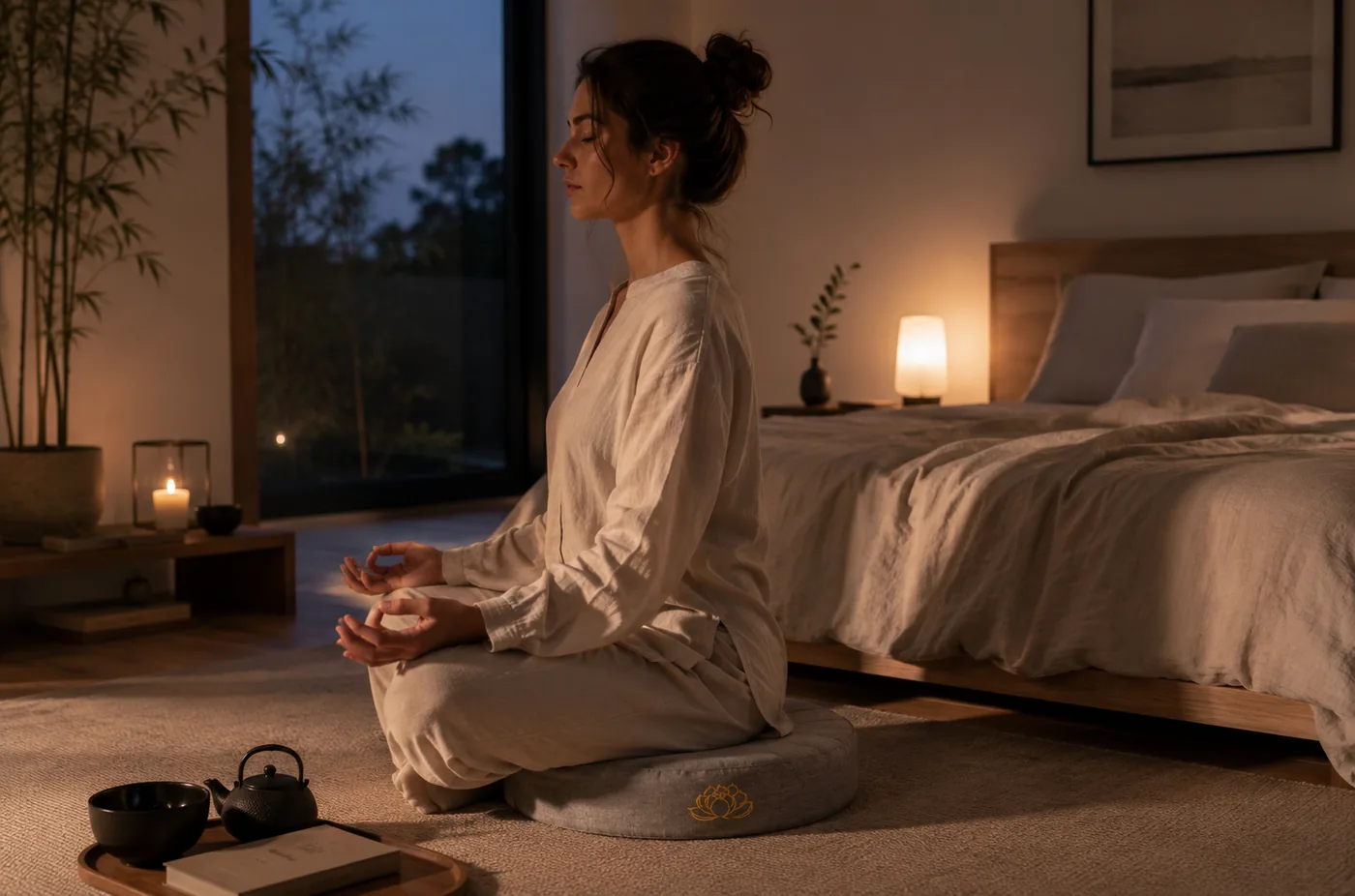
Yes, and it is the variable most beginners never think about. A tall zafu-style cushion, usually five to eight inches high, tips the pelvis forward aggressively, which is exactly what tight hips need. A lower seat gives a gentler tilt and a more grounded feel, which suits people whose knees already reach the floor without a struggle. We compare the classic options type by type in our best meditation cushion guide and in our zafu vs zabuton explainer.
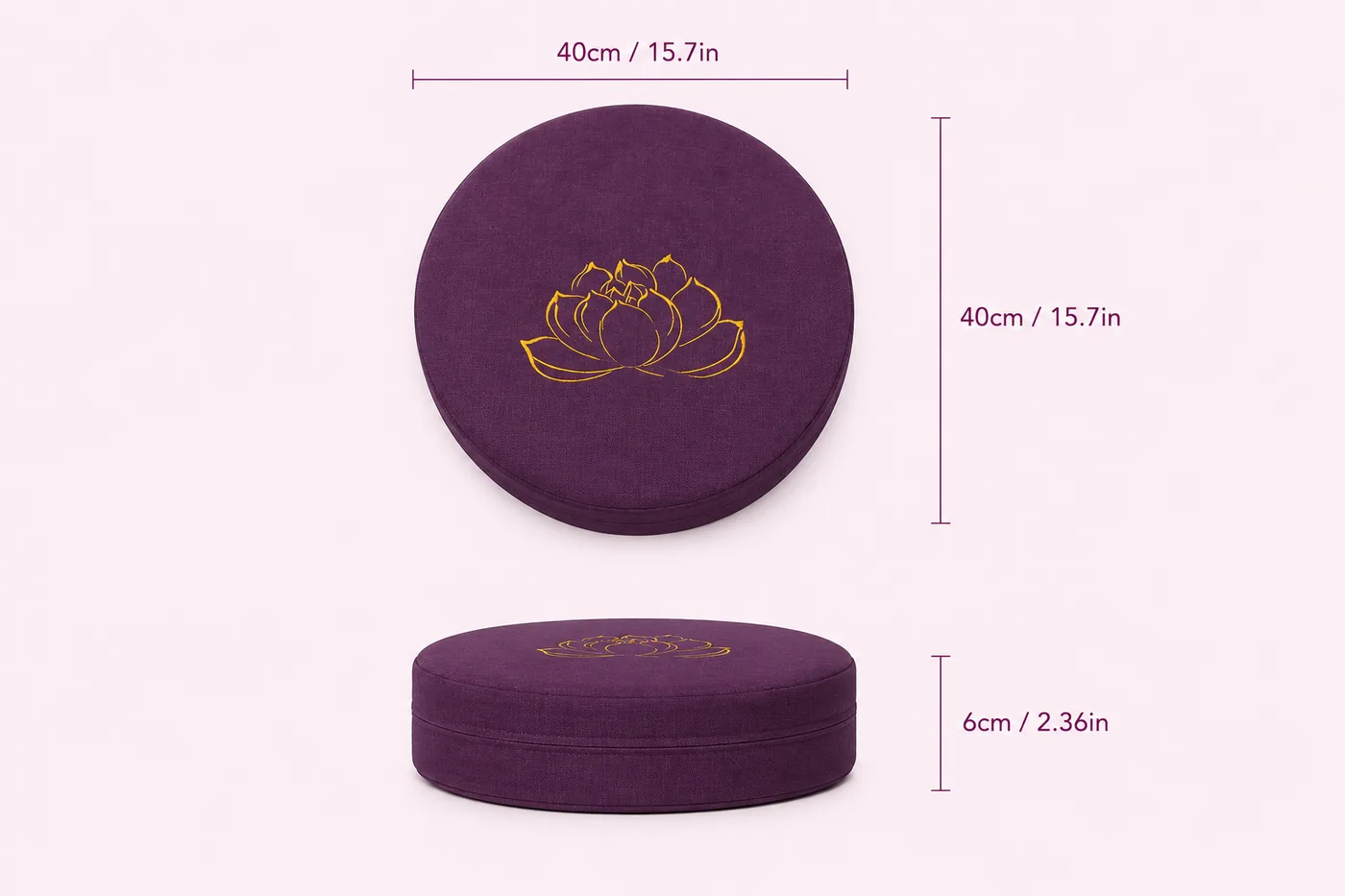
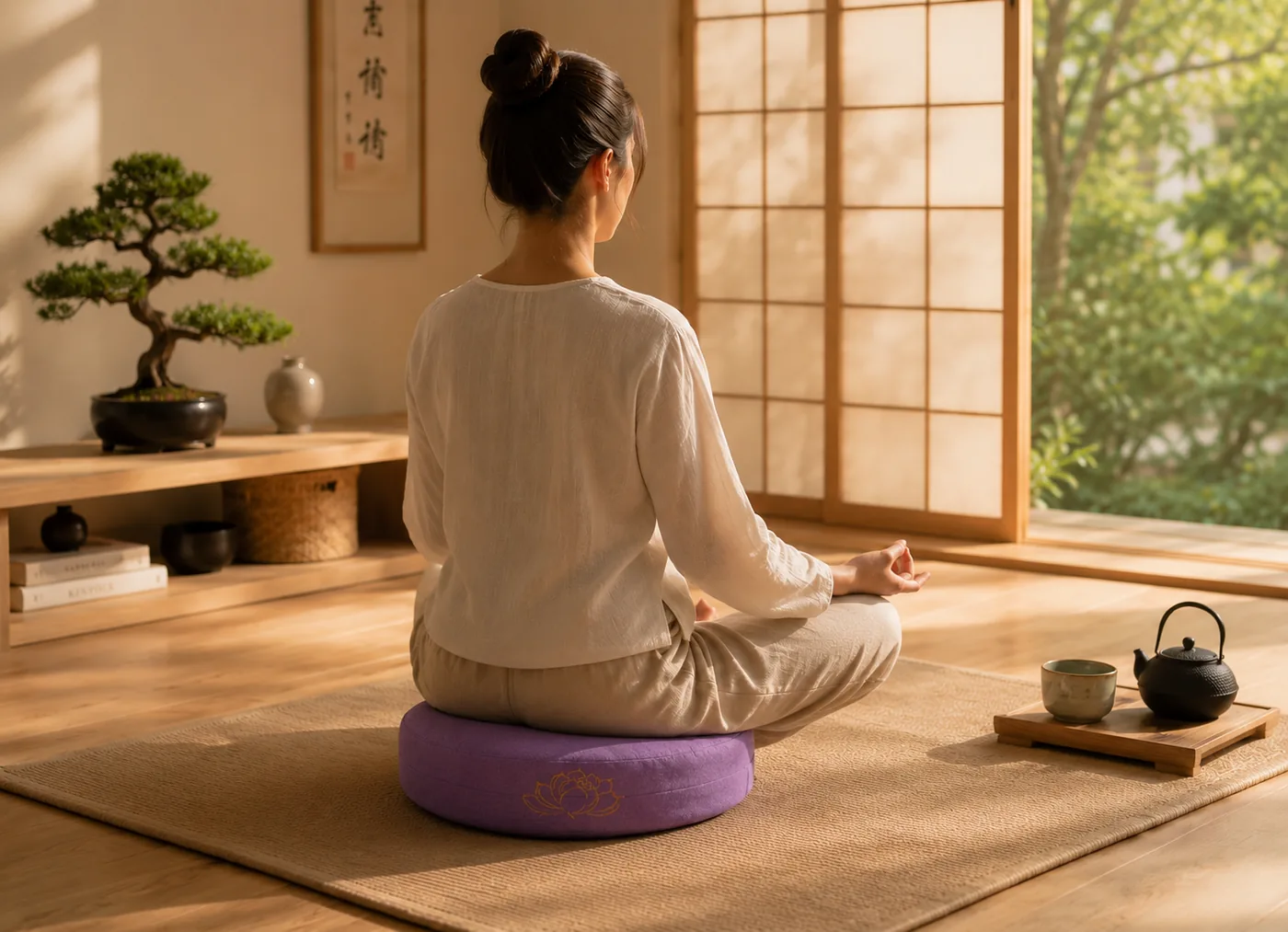
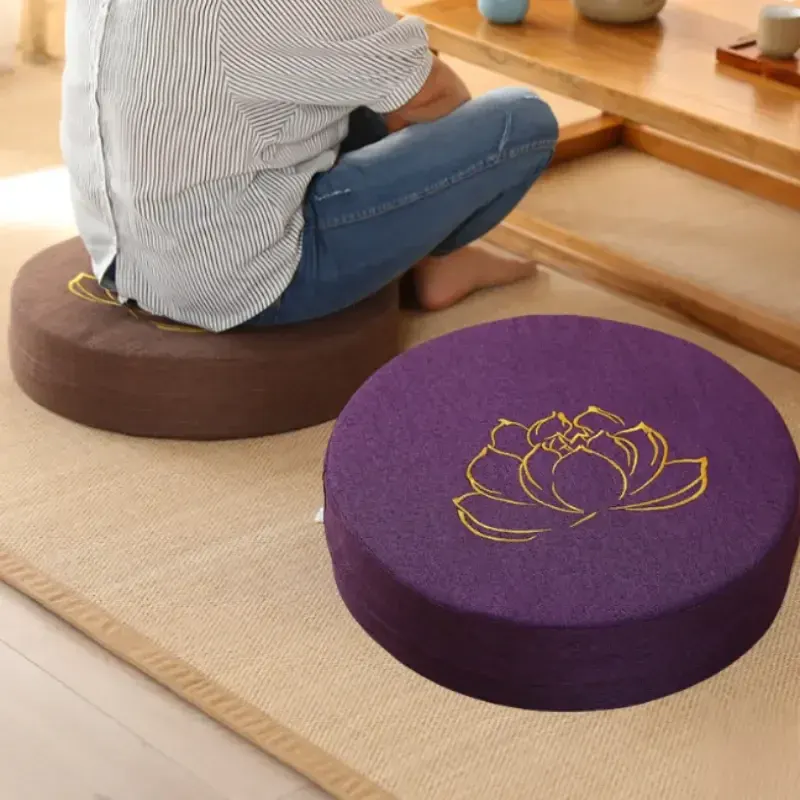
Our own StillSeat meditation cushion sits at the low, firm end of the range. It is 15.7 inches across and 2.36 inches tall, with a high-density foam core that stays flat under adult weight instead of mushrooming sideways. It suits Burmese position, easy pose, and seiza with the cushion laid flat between the heels.
Honesty matters here: if your knees stay well above your hips even in Burmese position, a low seat like ours is not the right starting point, and a taller buckwheat zafu will serve you better until your hips open up. If the low, stable style fits your body, the verified buyer reviews describe how the firmness feels in daily practice, and the meditation cushion set page covers the two-pack and three-pack options for shared households.
Keep reading: once your seat is settled, our take on whether meditation cushions are worth it helps you decide what, if anything, to buy next.
Free shipping · 30-day 30-day returns