
· Rachel Bennett
Why a Meditation Cushion Is Worth It
I have sat daily for twelve years. What decides which cushion you want comes down to two physical facts: how often you sit and how your hips are built. Both are measurable on your own living room floor in about two minutes, and this guide walks you through the measurement.
We will look at what a cushion concretely changes about the way you sit, how to read your own hips before choosing a height, what a folded blanket does under you and where it stops, and why about forty dollars is the cheapest upgrade a practice will ever ask of you.
The short answer, by situation
A dedicated seat that gets sat on every morning pays for itself in comfort within weeks. What changes from one sitter to the next is the height, not whether the seat helps. Find your row below before reading anything else.
| Your situation | The seat that fits |
|---|---|
| You sit daily or near daily | A dedicated cushion, in its spot and ready every morning |
| You sit a few times a week | A dedicated cushion: it holds its height with no refolding |
| You sit a few times a month | The same low, firm seat, ready whenever you are |
| You meditate in a chair and like it | Chair practice works as it is; a cushion is what opens floor sitting when you want it |
| Your knees float high in a cross-legged test | Height first: run the test in our meditation cushion size guide and get a number |
| You prefer kneeling | A low, firm cushion laid flat between the heels supports seiza |
The last two rows matter because height is what makes a seat work for your hips. Our best meditation cushion guide sorts the styles by body type, and the cushion vs bench comparison covers the kneeling route in detail.
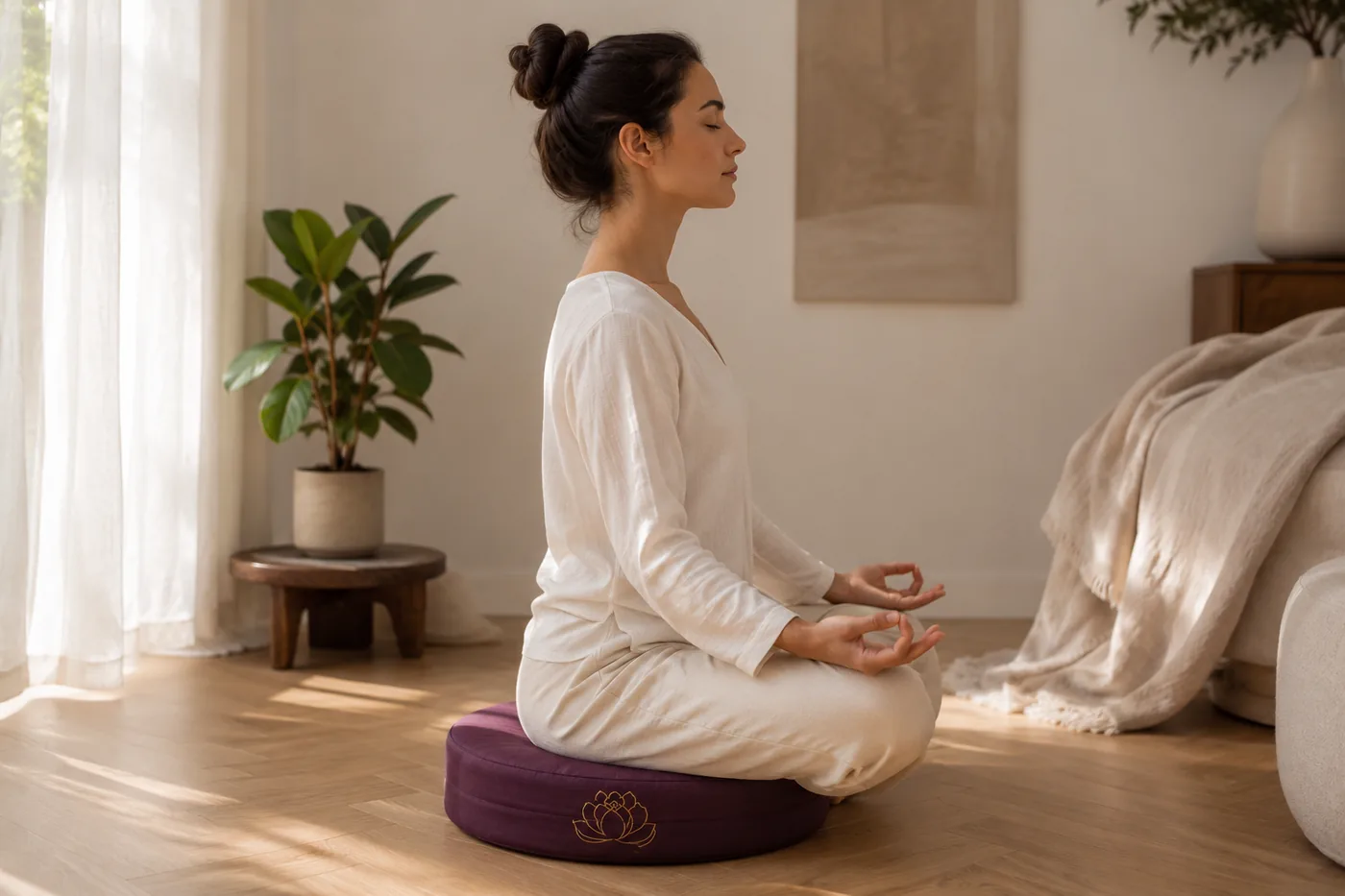
What a cushion actually changes
The mechanism is simple and mechanical. Raising your pelvis even a couple of inches lets it tilt slightly forward, and that tilt stacks your spine over your sit bones instead of behind them. Sitting flat on the floor does the opposite: the pelvis rolls back, the lower back rounds, and you spend the session propping yourself up with effort. We walk through the full setup in our guide on how to sit on a meditation cushion.
The second change happens at the knees. With the pelvis raised, your knees settle lower than your hips and can actually rest on the floor, so your legs stop hanging from your hip muscles and start acting as a stable base. In practice that means less fidgeting, less mid-session renegotiating of your legs, and fewer sits cut short because a foot has gone to sleep under you.
What a cushion does not do is meditate for you, fix a slouching habit by itself, or turn a restless mind quiet. It changes the seat, and the seat changes how long you can comfortably stay. Everything else is still practice. The number of Americans doing that practice keeps climbing, which is worth knowing when a cushion habit feels niche.
rise in the share of U.S. adults practicing meditation between 2002 and 2022
— NIH/NCCIH analysis of the National Health Interview Survey, published in JAMA, 2024
What the seat has to do
The job is precise: keep your pelvis a little higher than your knees, and hold that height for the length of a session without sinking. People have meditated on rolled mats, folded robes and porch steps for as long as people have meditated, and a kitchen chair works too if you sit toward the front edge with both feet flat. What separates those from a purpose-built seat is not comfort on minute one, it is whether the height is still there on minute twenty.
That is what a high-density foam core is for. It gives you the same lift at the end of a sit as at the start, in the same place, with nothing to rebuild first. If you are furnishing a floor-sitting corner more broadly, our floor pillows for sitting guide covers the casual, non-practice side of the equation.
What a folded blanket holds, and where a meditation cushion is worth it
Fold a firm wool or cotton blanket into a stack about two to three inches high, sit on the front edge, and you have a workable low seat; Zen centers have used them for decades. What a blanket does under a sitter is compress. It flattens as you sit, it needs refolding to stay level, and a soft fleece throw never gets firm enough to hold your pelvis up at all.
Bed pillows and couch cushions rate much worse. They feel promising for the first minute, then compress into a tilted pancake that rolls your pelvis backward, which recreates the exact slump you were trying to escape. Stacked bath towels sit in the middle: firmer than pillows, flatter than a blanket stack, and fine for short sessions.
A yoga bolster, if you already own one, is a legitimate in-between. It is firm enough to work, though its rounded shape can feel unstable under the sit bones, and most people end up using it for stretching instead, a use case we cover on the yoga meditation cushion page.
When spending about $40 on a meditation cushion is worth it
The blanket stops being enough at a predictable moment: when refolding it every day becomes friction, and friction is exactly what kills young habits. A dedicated cushion lives in its spot, holds its shape, and is ready the second you are, which removes one more step between you and the session. That is the real product, and about forty dollars is what it costs.
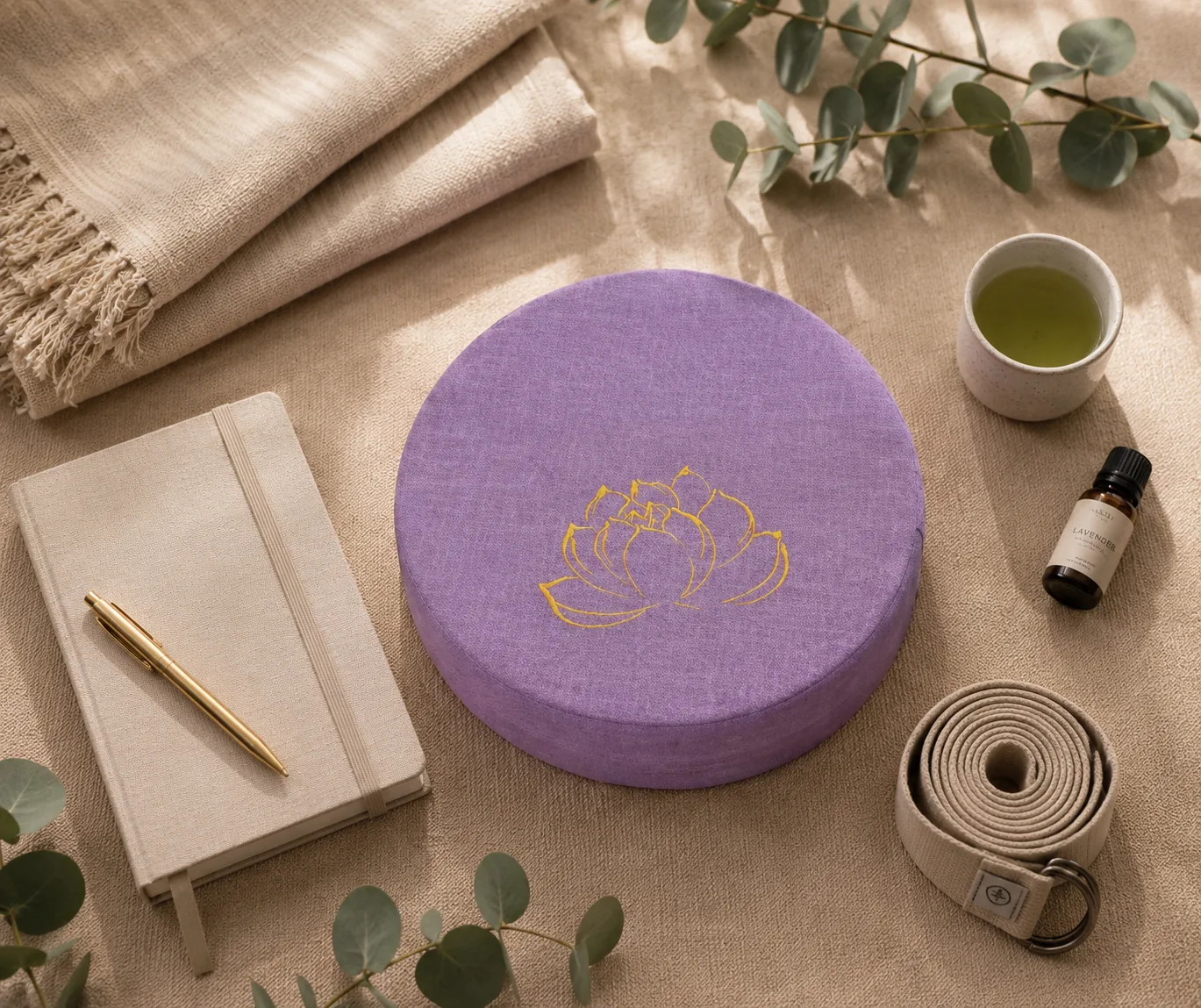
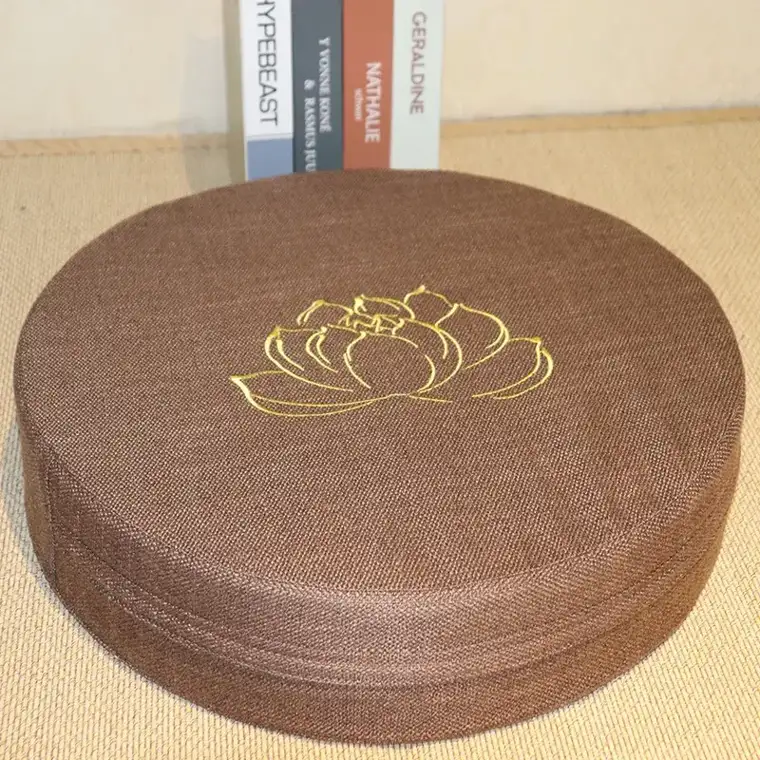
Since this is the category we sell in, here are our numbers plainly. The StillSeat meditation cushion costs $39.95, measures 15.7 inches across and 2.36 inches tall, and uses a high-density foam core that stays firm instead of pancaking, with a linen cover that zips off for the wash. One verified buyer summed up the trade-off we aimed for: "Good material, hard pillow, just what I wanted." It currently holds a 4.9 out of 5 average across 45 verified reviews, which you can read in full on our reviews page.
Two things to size up first. A low, firm cushion suits average and flexible hips: sit cross-legged on the floor and watch where your knees land relative to your hips, because the more they float, the more height you want under you. That test is laid out step by step in the zafu vs zabuton guide. And if more than one person sits at home, the per-cushion price drops on the multi-packs covered on the meditation cushion set page.
The bottom line is the same one I give friends: the seat is what makes the habit easy to keep, because it is already there when you are. At about forty dollars it is one of the least expensive pieces of equipment any daily habit will ever ask of you.
Free shipping · 30-day 30-day returns